












Orthodox Thoughts for the Week – 9 April 2014
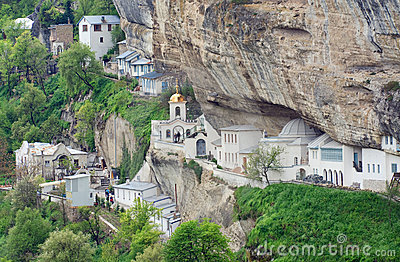
Crimea is in the news constantly these days but it holds more interest for Orthodox Christians as a place of pilgrimage to a unique cluster of ancient holy places.
In classical Roman times it was a place to exile important “criminals” and according to tradition, in about 100AD, Trajan sent Saint Clement of Rome there. He was martyred by being drowned and his relics were later discovered by Saints Cyril and Methodius. Part of the relics, the head, was taken to Kiev in 1007 and Saint Clement became the first heavenly protector of Kievan Rus. The ancient monastery at Inkerman, dedicated to the saint, destroyed at different periods by the Tatars, British troops in the Crimean War and by the Bolsheviks, has once again been restored. It is dramatically sited, hidden in a cliff face.
Another Pope of Rome, Saint Martin the Confessor, was exiled and martyred in Crimea, this time by a heretical Emperor, the Monothelite Constans II. The saint died of starvation in the year 655AD and a skete of the Saint Clement Inkerman monastery is being estabished on the site of his burial.
Two other great monasteries, Saint George at Balaklava (said to be the oldest in Crimea) and the Bakhchisaray Dormition Caves monastery are to be found in the same area, that is, close to Sebastopol. The Bakhchisaray monastery survived from the Byzantine period until 1778 and was protected by the Tatar khans, whose capital was nearby. The last Greek bishop, Saint Ignatius, lead his people to safety when the forces of Prince Potemkin were advancing on Crimea. They settled at Mariupol, where their descendants still venerate the monastery's miracle-working icon. The Caves monastery was later refounded as a Russian one, closed in the 1920s and re-established in 1993.
It is now one of the most beautiful holy places in the country, with its church, carved out of the rock high above the road in the cliffs.
This is only a small selection of the wonderful monasteries and convents of Crimea. In addition mention should be made of the many connections with the New Royal Martyrs. At the Palace of Livadia can be seen many personal mementoes of the Imperial Family as well as the beautiful chapel where the Tsar-Martyr Nicholas assumed the throne and his consort, Alice of Hesse, was Chrismated into Orthodoxy and renamed Alexandra Feodorovna.
Orthodox Thoughts for the Week – 13 March 2014

On these solemn days of the Great Fast, any “thoughts” should be those of the Triodion, the book used in our services during the Forty Days. This book is the treasure house of Orthodox teachings about meaning of our life, especially at this time.
The following is only a tiny selection:
When we choose to observe the Fast,we always profit from it. For the demons dare not attack us when we fast, and the guardian angels that protect our life stand at our side with greater eagerness when we are cleansed by fasting. (Monday in Cheese Week)
Let us observe a fast acceptable and pleasing to the Lord. True fasting is to put away all evil, to control the tongue, to forbear from anger, to abstain from lust, slander, falsehood and perjury. If we renounce these things, then is our fasting true and acceptable to God. (Monday of the First Week)
Let us keep a spiritual fast: let us loose every bond; let us avoid the stumbling blocks of sin; let us absolve our brothers from their debts, that we too may be forgiven our transgressions. Then we shall be able to cry aloud to God: Let our prayer be set forth in Thy sight as incense, O Lord. (Monday of the Second Week)
Let us keep a true fast before the Lord: let us abstain not only from food but from angry speech and lying and from every other passion, that we may behold Pascha in purity. (Tuesday of the Second Week)
In this season of repentance, let us stretch out our hands in works of mercy; and then the ascetic struggles of the Fast will bring us to eternal life. For nothing saves the soul so much as generosity to those in need, and almsgiving combined with fasting will deliver a man from death. Let us do all this with gladness, for there is no better way, and it will bring salvation to our souls. (Thursday in the Second Week)
Orthodox Thoughts for the Week – 26 February 2014
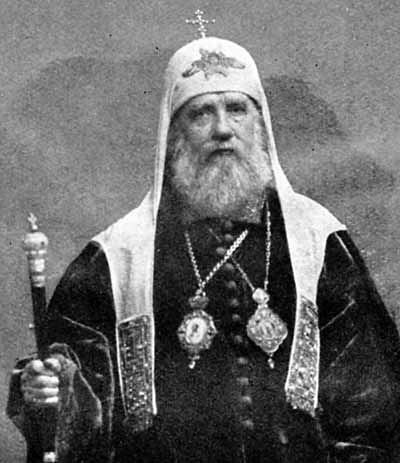
To conclude this little trilogy on the principal Hieromartyrs of the Communist yoke something must be said about the New Confessor Patriarch Tikhon himself. His life and struggles for the Church and people of Russia is fairly well known. After he was elected patriarch in November 1917 Orthodox Christians looked forward to a golden future under his pastoral care. He was loved and respected by all. But it was not to be. Attacks on bishops, priests and monastics began as soon as the bolsheviks seized power. The schismatic “renovationists” stole church buildings and property and were recognised by the soviets as the authentic Church. From 1922-1923 the holy patriarch was kept under close confinement. From his release to his death in 1925 he was sick in hospital. Everyone believed that his end was hastened by poison.
But let us turn back to a happier and little known period of Patriarch Tikhon's life. Between 1898 and 1907 he had headed the Russian diocese of America – actually all the Orthodox of whatever ethnicity comprised his flock. Among his acts as archbishop was one of great interest and significance for us here in England. This was the supervision of the publication of the first edition of “The Service Book of the Holy Orthodox-Catholic Apostolic Church” in 1906.
This was the fullest translation into English of the Orthodox service books ever undertaken at that time. It was the work of Isabel Hapgood, an American translator of immense talent, who had already translated most of the Russian classics (including sixteen volumes of Turgenev!) and who was a friend both of Lev Tolstoy and of the Empress Alexandra. None of her works are still in print with the exception of her service book, which many Orthodox priests still find indispensable.
Patriarch Tikhon regarded the work – and the future of Orthodoxy in the west which it symbolised – as of such importance that even in the midst of all his tribulations, in November 1921, he wrote from Moscow his endorsement of the second edition. This precious blessing is to be found in all subsequent editions. One final and little known fact – the cost of the first edition of Hapgood's service book was borne by two other New Martyrs - the Tsar Nicholas and Tsaritsa Alexandra.
Orthodox Thoughts for the Week – 19 February 2014
In the last column we looked at the life and martyrdom of the first of the New Russian Hieromartyrs, Vladimir of Kiev. In 1917 only three bishops of the Russian Church held the title Metropolitan, those of Moscow, Petrograd (St Petersburg) and Kiev. In 1918 Moscow once again became a Patriarchate. All three hierarchs of these principal dioceses suffered martyrdom, though in very different ways.
Metropolitan Benjamin (Veniamin) of Petrograd was elected in 1917, under the new system which was organised by the Church under the “Provisional Government”. He had been Rector of the Theological Academy of the capital and was extremely popular with its citizens. He guided the church wisely through the perilous early years of Bolshevik rule until the second great attack on believers started in 1922. This was the famous “confiscation of church valuables” which coincided with the widespread famine, brought on by the rural policies of the government. The Metropolitan blessed only voluntary donations of church valuables and not at all for the vessels used on the altar. Instead of the latter, the faithful were to contribute equal monetary payments. This was refused by the Bolsheviks who stated that there was to be compulsory confiscation only. The resulting resistance by the Orthodox of the Petrograd lead to 2000 trials and a total of 10000 executions by shooting.
The Metropolitan himself was finally arrested after he had solemnly condemned the priests who were leading the government-supported “renovationist” movement – part of which was called the Living Church – which was trying to take over the entire administration of the Russian Orthodox Church. Many of the renovationists were not only reformers but heretics. Metropolitan Bejamin's arrest took place in the church of the Alexander Nevskii Lavra in front of a huge congregation. Those were the days when the Bolsheviks did not try to hide their crimes but actually invited the world's press to witness them.
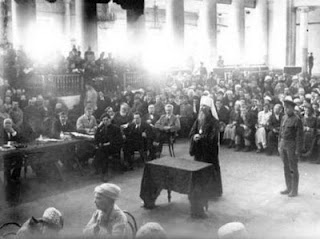
The Metropolitan was brought to public trial with several other well-known priests and accused of resisting the requisitioning of valuables and “plotting with the worldwide bourgeoisie”. He took full responsibility for all decisions and tried to shelter his clergy from arrest, above all he strongly denied ever being an “enemy of the people”. The prosecutor at one point revealingly declared, “The whole of the Orthodox Church is a counter-revolutionary organization. It follows that the whole Church should be put in prison”.
On 5th July 1922 he was found guilty of organising “a counter-revolutionary group” aimed at struggling with Soviet power. Even then he was offered freedom if he would recognise the renovationists.
On 13th August he and four senior priests were shaved and dressed in rags (in case they were recognised), taken out and shot. It is said that Metropolitan Benjamin was completely silent and only made the sign of the cross.
Now, in the cemetery behind the Lavra church there is a gravestone with his name and other details inscribed on it, but the Holy Martyr's body is not there. It was never found.
Orthodox Thoughts for the Week – 7 February 2014
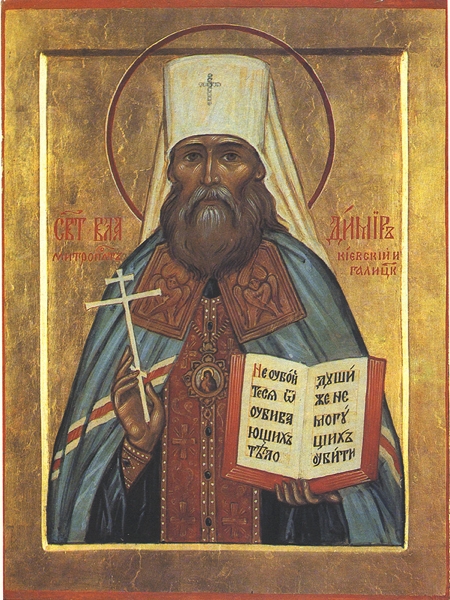
The First of the New-Martyrs of Russia
On Sunday we are keeping the feast of All the Holy New-Martyrs and Confessors of Russia. This commemoration is always held on the Sunday nearest 25th January (7th February in the new calendar) because that date is when the protomartyr of these saints, Metropolitan Vladimir of Kiev, became the first in a long line of Russian bishops murdered and tortured to death during and after the Revolution.
At the time of his death Metropolitan Vladimir was the most senior in age and date of consecration among the Russian hierarchy and was worn out with ill health. Battling for the truth was not new to him. He had stood up to the influence of Rasputin in church affairs and as a result, in 1915, had been “demoted” from the position of metropolitan of Petrograd, the nation's capital, to that of Kiev.
Here he once again found himself attacked, this time by those who wished to completely separate the Orthodox Church in Ukraine from the rest of Russia. He was not opposed to the Ukrainian political movement or to separatism, which he regarded as an entirely political matter, but when it came to the local Church he clearly stated that “I will endure my sufferings to the end, in order to preserve the Russian Church in Kiev, in which it originated.”
Readers of that Russian twentieth century classic “The White Guard” by Michael Bulgakov will remember the violence and chaos which engulfed Kiev after the abdication of the Emperor. In fact the city changed hands no less than sixteen times between 1917 and 1920. The Church was is a similar state of crisis, especially among the parish clergy, some of whom were loyal to their metropolitan, others wanting an Ukrainian national church and some (the most strident) wanting “democracy” - that is they allied themselves with the revolutionaries. The successors of the third group would eventually become the Renovationist Church of Ukraine.
Just as the new Ukrainian People's Republic was about to expel Metropolitan Vladimir and install an “All-Ukrainian leadership” on the Church, it found itself confronted by the fearsome new Bolshevik army which surrounded Kiev, which it finally captured in February 1918. The great Kiev-Caves Lavra, residence of the metropolitan, was attacked and captured even earlier. To the Bolsheviks the metropolitan represented everything they opposed – superstition, reaction, monastic “power” and closeness to the old monarchy. His end came quickly; on 25th January his living quarters were broken into, he was brutally searched for valuables and, when none were found, he was taken from the monastery and shot and bayoneted a short distance from the Lavra gates. He offered no resistance at all. After that his murderers became bored and were calm enough, a few days later, to allow his body to be taken back to the Lavra and for a full funeral to be held.
Their days were numbered anyway and Kiev fell to German troops in March 1918. By a strange coincidence on the day of the Hierarch's martyrdom, in the centre of Kiev, the provisional “ Ukrainian government” - now completely out of touch with reality – had proclaimed full independence for Ukraine.
Mercifully, the body of Metropolitan Vladimir survived the entire communist period and his precious relics are now venerated in the same caves which house the incorrupt remains of the ancient Holy Fathers of Kiev.
Orthodox Thoughts for the Week – 16 January 2014
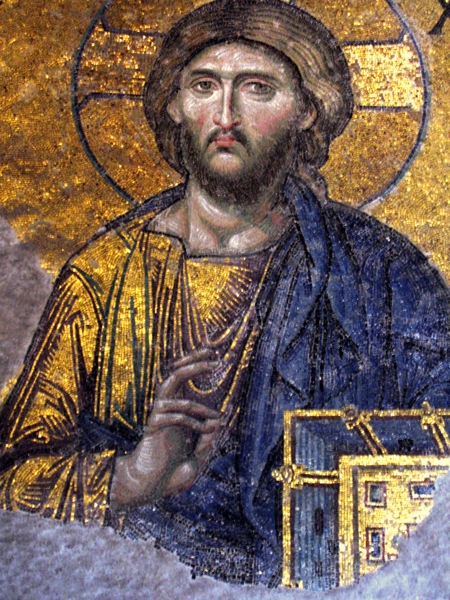
There has been a lot of recent controversy in our Church concerning the communication entitled "First Without Equals" written by the Metropolitan of Bursa, Elpidophoros, and posted prominently on the website of the Ecumenical Patriarchate of Constantinople. This is itself a reaction to and attack on the official statement of the holy Synod of the Russian Orthodox Church issued recently on the subject of “primacy” in the Church.
This column will leave the complex theological, canonical and historical issues of this unfortunate dispute to those (and there are many) who are best qualified to answer. We are not writing for theologians; nevertheless even the humblest Orthodox Christian is aware that our Church does not accept the Roman papacy, neither does it have any equivalent to it. So how are we to give a simple answer? Metropolitan Kallistos of Diokleia (Timothy Ware) is the internationally known theologian and author of the authoritative book "The Orthodox Church". This work has been regularly revised and one can be sure that every line has been carefully considered by the author. He is also a metropolitan of the Ecumenical Patriarchate. This is what he says about the primacy of Constantinople: "since the schism between east and west he has enjoyed a position of special honour among all the Orthodox communities; but he does not have the right to interfere in the internal affairs of other Churches".
The Metropolitan of Brusa expresses himself rather differently, stating that the patriarch of Constantinople is a primate with extraordinary privileges, including: "The right of appeal and the right to grant or remove autocephaly (eg the Archdioceses-Patriarchates of Ochrid, Pec and Turnavo [sic])"
It is embarrassing to say so but all Orthodox Serbians and Bulgarians know very well how these ancient churches were abolished – not by some ecclesial act but by the decree of the Sultan in the eighteenth century and for the most ignoble reasons.
But to return to the main issue. Which of the two metropolitans represents the official position of the Ecumenical throne? For they cannot both be right.
Orthodox Thoughts for the Week – 8 January 2014
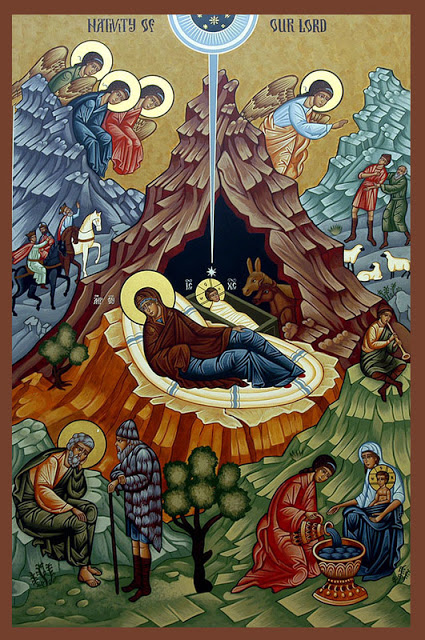
The great Feast of the Nativity of Our Saviour and the joyful days which follow it are often referred to in terms of nostalgic sentimentality, for indeed they do bring to mind memories of childhood, especially for those brought up in "the west".
A careful examination of the Orthodox services of these days can be a useful corrective. Our service books developed over a long period and are a synthesis of the traditions of worship of three centres: the Great Church (Agia Sophia in Constantinople); the Stoudios Monastery in the same city and the Monastery of Mar Saba in the Judean desert.
The earliest services in our calendar are connected with Pascha and the days around it. It was only in the fourth century that the feasts of Christmas and the Baptism of Christ began to be fixed on their present dates. What is important for us is to see how the compilers of the texts for these feasts related them to the Death and Resurrection of the Lord.
Pascha is preceded by the Great Fast; a fast of forty days also gradually developed before Christmas. There is a more intense and strict period of preparation for five days before the Nativity corresponding with Passion Week. On Christmas Eve there is a solemn Vespers with eight prophetic readings followed by the Liturgy of Saint Basil, exactly like Great Saturday with its fifteen readings. Earlier that day the Royal Hours are served as they are on Great Friday. One could continue with these liturgical parallels but even more striking is the way the composers of the troparia and sticheras of Christmas portray the Gospel events: the Manger is a foreshadowing of Christ's Tomb; the swaddling-clothes His Burial Shroud; even the shedding of His Blood on the Circumcision is always linked to the Saviour's Sacrifice on the Cross.
All the events of the nativity are seen as prophetic by the writers of our hymns, as the Holy Theotokos already knew them to be “and pondered them in her heart” (Luke 2:19).
We worship Thy Nativity, O Christ! Show us also Thy divine Appearing. (sung at the ninth Royal Hour on the eve of the Nativity).
We worship Thy Passion, O Christ! Show us also Thy Holy Resurrection. (ninth Royal Hour on Great and Holy Friday).
Orthodox Thoughts for the Week – 27 December 2013
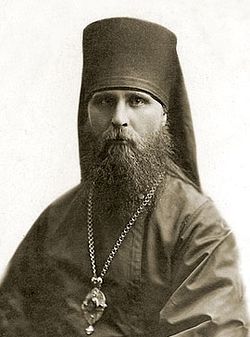
In the official calendar of the Russian Orthodox Church almost every day now includes the names of New Martyrs of Russia who suffered during the period of Communist rule, commencing with the year 1917. These lists of martyrs grow each year as the diocesan and patriarchal commissions, concerned with gathering accurate information on their sufferings, publish the results of new findings.
The process of recording the biographies of the New Martyrs commenced long ago with the pioneer work of the great Archpriest Michael Polsky, a priest of the Russian Church Abroad, who left Russia in 1930 by escaping over the Iranian border and who had known the Holy Patriarch Tikhon and many of the martyrs he later wrote about. He was senior priest of the church in London during the Second World War. An English translation of his "New Martyrs of Russia" is still in print.
As every week commemorates so many names it is impossible to mention more than one at a time. On the 15th December 1929 a very remarkable servant of God, Archbishop Hilarion (Troitsky), died in the hospital of a St Petersburg prison. He was aged forty-four and had endured terrible sufferings for the previous six years in the labour camp at Solovki. His early life had been that of a brilliant theologian who specialised in the doctrine of the Church. His writings are still studied and show him to have been on the conservative side of theological opinion and an opponent of ecumenism, as it then existed.
He always gave deep and erudite answers to the problems of church life in the early Bolshevik period, when the government authorities were trying their best to divide the Orthodox Church into warring sects. Some accounts state that when controversy arose among the bishops (many of whom were imprisoned at that time) over the famous declaration of loyalty to the state by Metropolitan Sergius in 1927, archbishop Hilarion refused to side with those who separated themselves from the metropolitan, while at the same time he expressed his disagreement with the document itself.
Archbishop Hilarion was somehow brought to St Petersburg by his relatives when he was already dying. For this reason he is one of the few New Martyrs whose relics can now be venerated. They are enshrined in the Sretensky Monastery in Moscow as its greatest treasure.
Before being taken there he was briefly laid to rest in the beautifully restored Novodevichy Convent in St Petersburg which stands next to the cemetery where he was buried. The convent still holds his vestments and coffin and should be visited by all Orthodox pilgrims to Russia's second capital.
Holy New Martyr Hilarion, pray to God for us!
Orthodox Thoughts for the Week – 15 December 2013
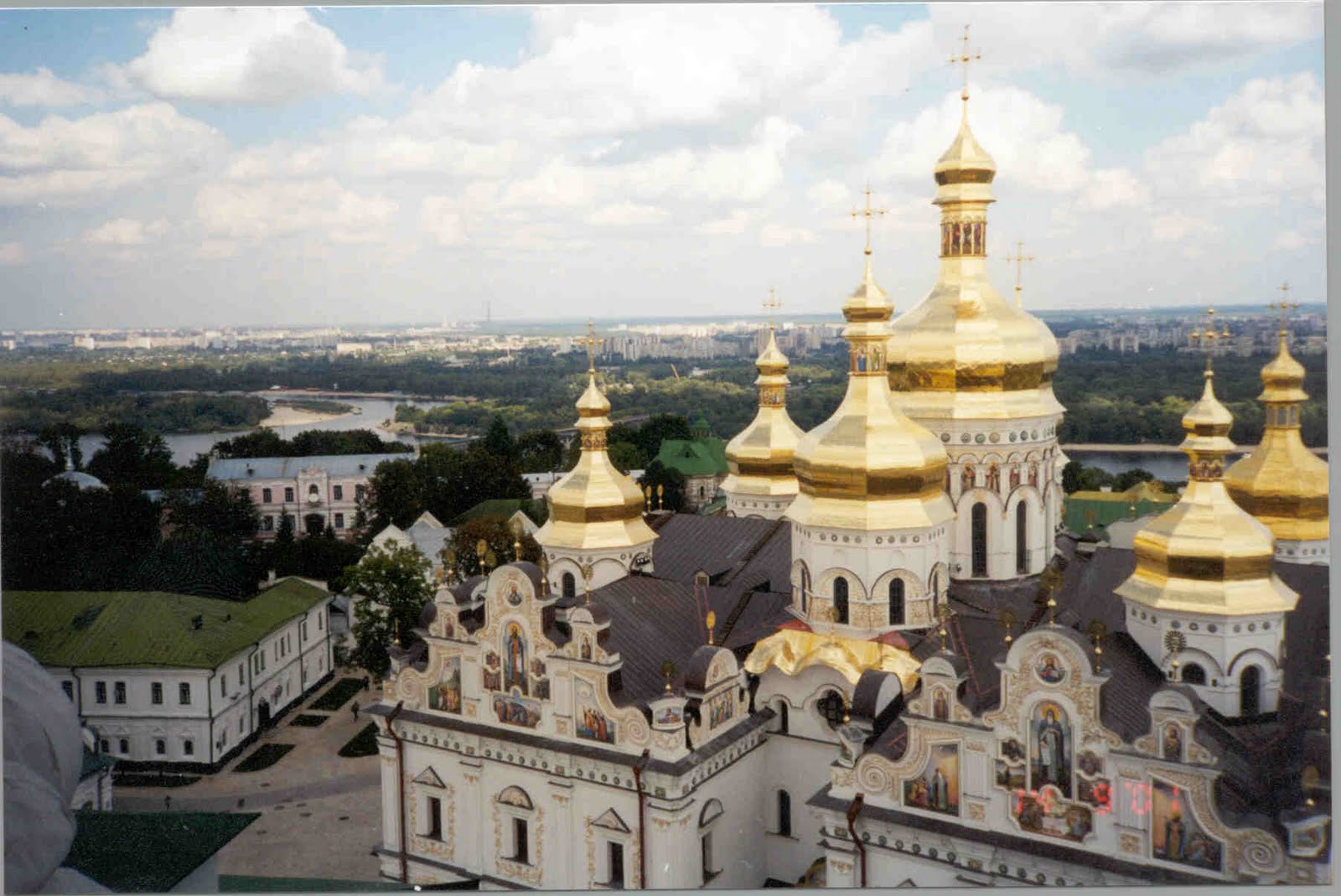
For many days now our media has been filled with news of the street demonstrations in Kiev. It is not for this column to discuss political matters, which in any case are for the people of Ukraine to decide, but Orthodox Christians should be concerned at the way the obvious divisions in Ukrainian society are being presented to western audiences.
One particularly repeated piece of disinformation is that the struggle is between the "Orthodox east" of the country and the "Catholic west". A glance at the religious statistics will quickly show how absurd is this statement, yet it is made repeatedly.
Ukraine has three churches claiming to be "Orthodox" - the canonical Ukrainian Orthodox Church lead by Metropolitan Vladimir, which is an Autonomous Church of the Moscow Patriarchate, and two schismatic bodies, the Kievan Patriarchate of "Patriarch" Philaret and the so-called Autocephalist Church. The latter two are not recognised by any other local Orthodox Patriarchate or Church. Ukraine has also two Churches under the Pope - the Roman Catholic Church, many of whose members are of Polish descent, and the "Ukrainian Greek Catholic Church", formerly called the Uniate Church. The latter group have similar church services to the Orthodox, from whom they divided in Galicia around the year 1700.
Ukraine is divided into twenty-five provinces. Of these only three (Lvov, Ivano-Frankovsk and Ternopol - the old Austrian land of Galicia) have a Catholic majority. In these three provinces about two-thirds of the people are Uniates and about one third Orthodox schismatics. In every one of the twenty-two remaining provinces the majority of the parishes are canonical Orthodox ones, whether in the east or the west of the country. It is true that some opinion polls have shown a majority in favour of the "Kiev Patriarchate" but these are not representative of the people who attend the churches. This can be seen in the overwhelming majority of priests, parishes, seminaries which adhere to canonical Orthodoxy. Above all, the 186 monasteries with their nearly 5000 monks and nuns are almost all in the canonical Church. When previous attempts were made to form an independent Church - in the early 1920s and under German occupation in the 1940s - once again the monasteries were the staunch defenders of the canonical link with the Russian Orthodox Church.
The legacy of Orthodoxy in Ukraine is of enormous significance to Orthodox Rus as a whole. Beginning with the Holy Prince Vladimir, the Baptizer of Rus, Saints Anthony and Theodosius and all the Fathers of the Kiev Caves up to the martyrs and ascetics of the twentieth century, who are constantly being glorified, the light of Orthodoxy has never been extinguished here, despite many attempts of its enemies. Whatever the outcome of the present political unrest we must pray the this light will continue to shine.
Orthodox Thoughts for the Week – 8 December 2013
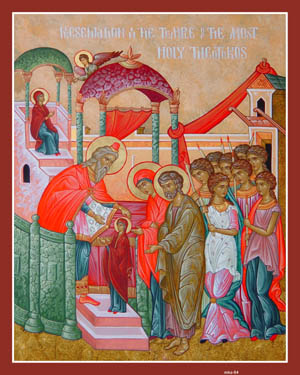
This week we have been keeping the great feast of the Entry into the Temple of the Most Holy Mother of God.
The original account of this event in the history of our salvation, as well as the source of many of the hymns in the service of the feast and also the traditional Iconography of the Marian feasts, is found in the Book of James. This is a "Gospel" describing the birth of the Mother of God, her own giving birth and some details of the early life of Our Saviour. It is very ancient, probably from the mid-second century AD, and may even be based on an earlier document. It was never accepted by the Church into the canon of the New Testament, probably because it appeared so much later than the Four Gospels, though there is nothing remotely heretical about it.
The Infancy Gospel of James was so influential that it may be interesting to reproduce the actual words in which it describes the Entry into the Temple:
"And the child became three years old, and Joachim said: call for the daughters of the Hebrews that are undefiled, and let them take every one a lamp, and let them be burning, that the child turn not backward and her heart be taken captive away from the temple of the Lord. And they did so until they were gone up into the temple of the Lord. And the priest received her and kissed her and blessed her and said: The Lord hath magnified thy name among all generations: in thee in the latter days shall the Lord make manifest his redemption unto the children of Israel. And he made her to sit on the third step of the altar. And the Lord put grace upon her and she danced with her feet and all the house of Israel loved her. And Mary was in the temple of the Lord as a dove that is nurtured: and she received food from the hand of an angel."
Orthodox Thoughts for the Week – 20 November 2013
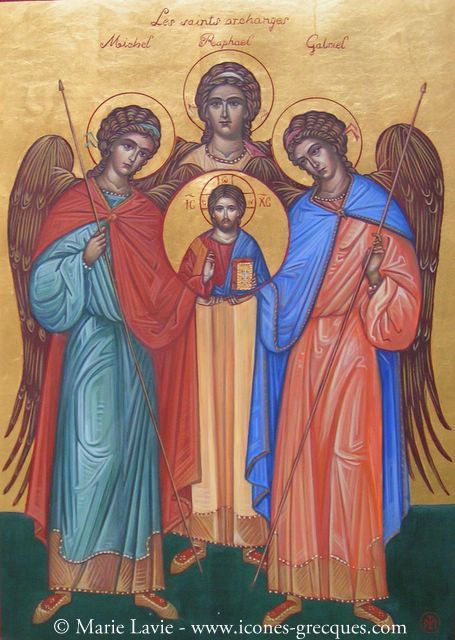
On Thursday of this week we celebrate the feast of the Archangels Michael and Gabriel and All the Bodiless Powers of Heaven. Though not one of the Twelve Great Feasts, it is everywhere kept as one of the most important days of the Church year.
We often remember the Holy Angels as beings who protect us, for each of us has a personal Guardian Angel, or as messengers of the great events of our Salvation - the Annunciation and Resurrection for example - but perhaps on their feast we should also recall their task of the eternal glorification of the Holy Trinity in both the heavenly and earthly Liturgies.
A close look at the prayers and hymns of our Divine Liturgy will reveal something of the mysterious role of the angels in our worship. The Bodiless Powers are mentioned just before each important action: before the Entry with the Gospel, the priest prays that "with our entry do Thou cause the entry of the holy angels, serving and glorifying Thy goodness with us". The prayer of the Trisagion (Thrice-Holy) Hymn asks that God accept our praises as He is praised by the "Seraphim and glorified by the Cherubim and worshipped by all the heavenly hosts". Only then do we begin to sing the hymn itself. The Great Entrance is accompanied by the singing of the Cherubic Hymn in which we are bold enough to say that we "mystically represent the Cherubim [when we] sing the thrice-holy hymn to the life-giving Trinity". Finally, at the beginning of the most important part of the Liturgy, the Anaphora, the priest gives thanks "for this Liturgy which Thou hast been pleased to accept from our hands, though there stand before Thee thousands of archangels and ten thousands of angels, the cherubim and seraphim". We then sing the hymn "Holy, Holy, Holy..." which is that in which we join the cries of the hosts around God's throne and which we believe they join with us on earth, present though unseen and unheard.
This close connection between the Angels and the Liturgy is also true of the rest of our Orthodox services and hardly a page of the service books is without a mention of them. The following stichera, taken from the Vespers of this week's feast, again highlights the close connection between our earthly task of hallowing the Name of God and that of the angelic hosts above:
"Let us, singing in the world like angels, raise hymns of praise to God borne upon the throne of glory, and let us cry this hymn aloud: Holy art Thou, O heavenly King; Holy art Thou, Word co-eternal; Holy art Thou, All Holy Spirit".
Orthodox Thoughts for the Week – 12 November 2013
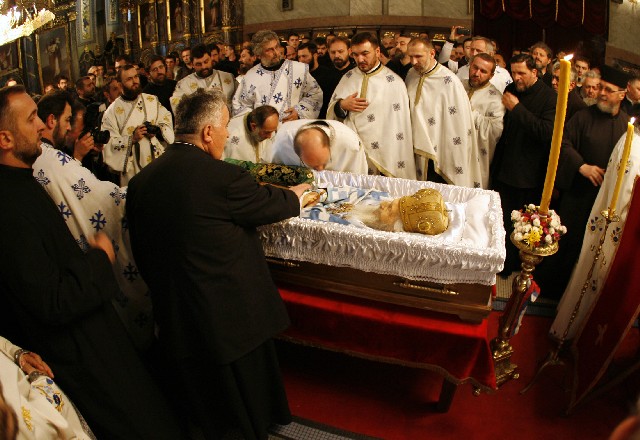
On Monday, the countries of western Europe remembered the ending of the First World War and thereby the dead of this and also the second terrible conflict of the Twentieth century.
In this country, up until 1918, it had not been customary to offer public prayers for dead combatants because of the strength of the Protestant tradition, which rejects all prayer for the departed. Such was the outpouring of grief over the loss of the flower of the nation, however, that these ancient prejudices were swept away, and Britain joined the traditionally Roman Catholic and Orthodox lands in imploring the Lord to grant eternal rest to its sons.
Praying for the dead is essential, both in our private prayers and in the public services of the Orthodox Church, and always has been. Theologians may have disagreed concerning details of the path of the "soul after death", and the Church has never accepted the western doctrine of Purgatory, yet one thing is certain - we can HELP the departed by our prayers, by acts of almsgiving, and above all though the offering of the Divine Liturgy.
In the Roman liturgical tradition November 2nd is set aside as the commemoration of "All Souls." The Orthodox practice is a little different. All Saturdays are days of remembering the dead and our Octoechos provides a special Canon to the Dead for each of the eight tones. There are also Saturdays when the dead are particularly prayed for: the Saturday before Judgement Sunday (just before the Great Fast begins) - "the memorial of those who have fallen asleep from all the ages" - and the Saturday of Souls on the day before Pentecost/Trinity Sunday. The Russian and Serbian Churches keep additional days of remembrance like the famous "Demetrius Saturday", held close to the feast day of the Great Martyr. Finally there are the days of intense prayer after the death of an individual Orthodox Christian: the third, the ninth and the fortieth days.
The texts of all these services are full of the most profound theology concerning Orthodox beliefs about the meaning of death and should be read if anyone wants to understand our tradition. One example will give a small idea of the great riches contained in them. It is taken from the sticheras of Vespers on the Saturday of the Dead, before Judgement Sunday:
By Thine own Blood, O Saviour, Thou hast ransomed mortal men, and by Thy death Thou hast delivered us from bitter death, granting us eternal life by Thy Resurrection. Grant rest then, O Lord, to all those who have fallen asleep in godliness, whether in wilderness or city, on sea or land, in every place, both princes, priests and hierarchs, monks and married people, of every age and line, and count them worthy of Thy heavenly Kingdom.
Orthodox Thoughts for the Week – 4 November 2013
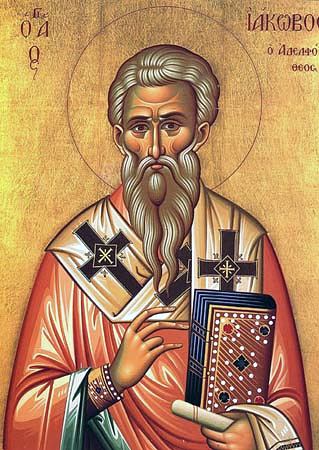
Tuesday of this week is the feast of Saint James of Jerusalem, Brother of the Lord. This Apostle is not to be confused with either of the two Jameses of the Twelve Apostles. He is the close kinsman of Our Saviour (in Greek his title translates as "Bother-of-God", in the same sense that the Blessed Theotokos is Mother of God) and the author of the Epistle of Saint James. He also became the first bishop of Jerusalem, Mother of all Churches, and presided over the Council described in the Acts of the Apostles, which laid down how the gentile converts were to regard the Law of the Old Testament. He was martyred in Jerusalem in the year AD 63 and his tomb can be venerated in the beautiful Armenian cathedral in the old city.
All this can be read in our lives of the saints. What is less well-known is that by tradition he is the author of our first Orthodox Liturgy. These days we are familiar only with the two liturgies of Saints Basil the Great and John Chrysostom, together with the Liturgy of the Presanctified Gifts in the Great Fast. The Liturgy of Saint James, however, is by no means extinct. It is still served in Jerusalem itself and in a number of monasteries, such as Holy Trinity Jordanville, where the monks have prepared a text for use in church.
It is a long but most spiritual service and many of its prayers should be better known than they are. Some scholars have doubted the attributions of authorship of the ancient liturgies but fashions seem to be changing and both Saint Basil and Saint John are now credited with many of the prayers in their liturgies.
But what of the seemingly extraordinary claim that Saint James wrote the central portion of the Liturgy which bears his name? One extraordinary fact emerges. In many manuscripts, when the sacred narrative occurs which describes the Lord's Mystical Supper, the words are phrased thus: "He gave thanks, and hallowed, and brake, and gave TO US His Apostles and Disciples, saying, Take, eat: this is My Body which is broken for you, and given for the remission of sins." The same word "us" is also included in the taking of the Cup. As one nineteenth century scholar put it, "this seems to denote the authorship of one who was present at the Last Supper."
This Liturgy is full of beautiful and deep prayers. The one before the reading of the Gospel asks that we may understand what has been read, "that we do not appear simply as hearers of Thy spiritual words, but doers of good deeds, having a blameless life and conduct without reproach". This echoes very closely the language of the Epistle of Saint James.
This wonderful Liturgy ends with the following petition:
"From strength to strength advancing, and having fully accomplished all the Divine Liturgy in Thy temple, we now also pray Thee, vouchsafe to us Thy full mercy; set aright our paths: root us in Thy fear; and count us worthy of Thy heavenly kingdom."
Orthodox Thoughts for the Week – 29 October 2013
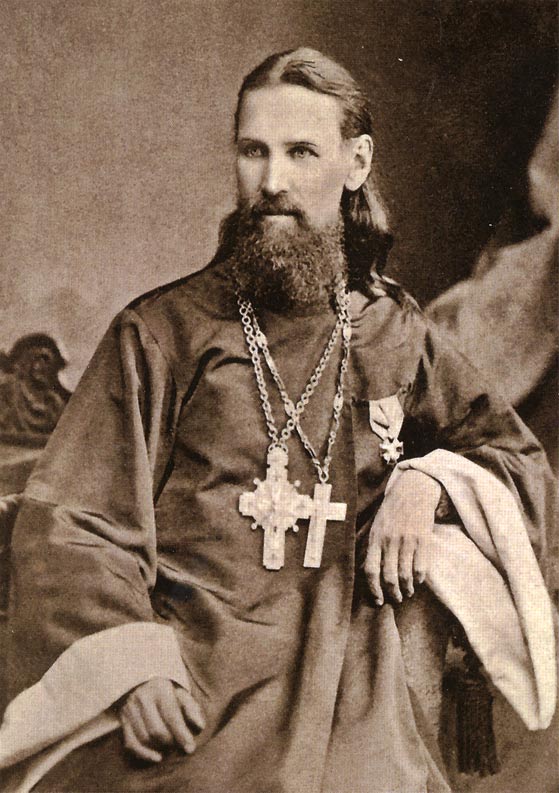
A day of many meanings
On Friday 1st of November, in many places, especially in North America, Orthodox Christians celebrate a second feast of the great Wonderworker, Saint John of Kronstadt. There are two reasons for this: first it is the day of his birth (he was named after Saint John of Rila, whose feast falls on this day) and second because it is felt singularly appropriate to solemnly mark the eve and day with church services to such a powerful intercessor, when all around terrible and demonic images are being paraded to greet "Halloween."
All Orthodox must now know the spiritual dangers attached to the celebration of Halloween and many of our bishops have made detailed denunciations of it in the past. Its origins are disputed and Celtic paganism or central European folklore have both been suggested. The commercial aspects come from the United States. In many places it has not been observed for very long. It has only recently reached Russia, and even in this country it was not widespread until a few decades ago.
What is very serious is that each year the external manifestations of Halloween (masks, costumes etc.) become more and more frightful and satanic. This can be seen by everyone in every shopping street. To attend church services or at least to pray at home and beg the powerful prayers of Saint John of Kronstadt is our best defence.
Those of us who have relations who died unbaptised or outside the Orthodox Church can add prayers to the Holy Martyr Varus (Warus, Iar), whose is also remembered on 1st November. He is traditionally asked to intercede "for those who have died unbaptised or have been buried in an ungodly manner, that they may be delivered from eternal darkness" (from the prayer to Saint Varus).
Last, but not at all least, this day is the birthday of our own beloved New Martyr Grand Duchess Elizabeth. With such great intercessors to help us, we need not be dismayed by the Evil things which surround us.
Orthodox Thoughts for the Week – 22 October 2013
Next Sunday the Church remembers the Holy Fathers of the Seventh Ecumenical Council of Nicaea, which took place in the year 787. Like other commemorations of Council Fathers, for example, that of the First Council on the Sunday after the Feast of the Ascension, it always occurs on a Sunday - showing its importance in the calendar. The Seventh Council finally confirmed and defined the Orthodox teaching about the veneration of Holy Icons and condemned iconoclasm ("image-breaking") as a heresy. It is thus central to our Faith.
In London, an interesting exhibition is currently running called "Art Under Attack". Here can be seen examples of the destruction of images in the widest sense and for a variety of reasons. The organised destruction of paintings, carved images of saints and crosses in the English Reformation, Royalist symbols under Cromwell, monuments to English heroes in Republican Ireland and so on. Obviously most of these examples could not be called iconoclasm in the Orthodox sense and even the Reformation case needs to be qualified.
In the reign of Edward VI in the mid-sixteenth century, the destruction of "idolatrous" pictures, relics and other holy things clearly had a theological basis - that of the new "Reformed" religion. The Puritans of the next century finished off the work but there were now no proper images left, so that most of their rage was directed towards any sign of beauty or colour remaining in our churches - painted windows, carved roofs and so on. This of course is philistinism rather than iconoclasm. The iconoclastic emperors of old were not like this but were very keen on beautiful things and happy to decorate the churches of Constantinople with pretty mosaics showing fish, flowers and jewelled crosses. It was the image of the transfigured human face and body - whether Christ's or His Chosen Ones - which they rejected, and which the Holy Council Fathers command us to venerate and honour with incense, kissing and bowing down. This, so Orthodox believe, is because our outward gestures pass on, through the medium of the icon, to the heavenly object of our prayer and worship which is represented. The same of course applies to Holy Relics and it is characteristic of real iconoclasts that they usually object to relics as well.
In the west, at the present time, icons are beginning to appear in some non-Orthodox churches and we should be grateful for this. However in many other cases there has been a general clearing out of images of the saints leaving many, especially Roman Catholic churches, as bare as if a new reformation had occurred. We must be careful not to be influenced by such trends, which are dangerous, even when disguised as aesthetic or liturgical changes of taste. The best way to do this is to hold fast to the assured and inspired teachings of the Fathers of the Council. In this connection, it is useful to remember that a host of martyrs, many still commemorated in our calendar, suffered under the iconoclast rulers of the eighth and ninth centuries. They certainly did not believe that icons were merely a question of art and aesthetics.
Ikos of the Feast:
The all-compassionate God, Who ever desireth to rouse us to the perfect memory of His Incarnation, gave this instruction to men: that they depict His precious form with pigments of icons; that, beholding this in visible objects, we may believe what we have heard said, clearly understanding the activity, the name, the features and the sufferings of the saints and Christ, the Bestower of crowns, Who awardeth wreaths to the holy athletes and martyrs. And the Church, most diligently holding fast to the true Faith for their sake, doth venerate the image of the incarnation of Christ.
Orthodox Thoughts for the Week – 14 October 2013
To continue from our last column, it cannot be emphasised too strongly that the legacy of Custine and his successors, with its hostility towards Russia, its Church and its culture, is very much alive today. Our newspapers in particular are filled with it every time some Russian "story" pops up. During the "Cold War" period, Custine's journal was recommended reading for aspiring young diplomats appointed to the British embassy in Moscow. Perhaps it still is.
A recently published history of the Moscow Kremlin by a well respected London academic, which has already been widely praised, manages to quote yet again the most luridly hostile comments of foreign visitors over many centuries, though she herself is careful to avoid identifying herself too closely with them.
Readers of this column who are Orthodox of other nations should not imagine that this does not affect them. It does, as Custine's identification of Byzantium as the root problem would indicate. The poor Serbs, for example, are frequently written about with a kind of racialist generalisation which would be unthinkable if the subject were any other nation. Recently a respected Sunday newspaper in England contained a column which maintained that gays were persecuted in Greece, the Balkans and Russia, "the territory of the Orthodox Churches" which hated them. No evidence was given for this attack. Even the tiny and powerless ancient Eastern Christian communities of the Middle East are treated with scarcely disguised contempt. The old British colonial legacy, which preferred the "noble" Muslim warrior to the educated Christian clerk, also has a long life.
Our Saviour tells us to be "wise as serpents, and innocent as doves." (Matthew 10:16) and the great patristic commentator, Blessed Theophylact of Ochrid, explains this beautifully and in a way which should shape our attitude to all this hostility:
"So that you might not imagine, hearing them referred to as sheep, that a Christian must be foolish, Christ says that he must also be wise, knowing how to act when surrounded by many enemies. For just as the serpent allows all the rest of its body to be struck but guards its head, so let the Christian give all of his belongings and even his body to those who would strike it; but let him guard his Head, which is Christ and faith in Him."
Orthodox Thoughts for the Week – 3 October 2013
From the reign of Tsar Ivan IV in the sixteenth century onwards, many western European visitors to Russia have recorded their impressions and judgements on the country and its people. In some cases these opinions have been favourable ones, and this has usually been from those with long periods of residence. It has to said, however, that most western impressions have been decidedly unfavourable. This little survey considers those writers who not only portray Russia in a negative light but who try to explain why the country and its culture is the way it is.
The Marquis de Custine, who visited Russia in 1839, during the reign of the Emperor Nicholas I, is of particular importance here because his opinions were to be very influential all over Europe, and in some ways still are. He himself was of no real importance; he was of scandalous personal life and barred from Parisian society – interestingly, he also knew no Russian. The journal of his visit however, was soon translated into all the principal European languages and has never been out of print. Many subsequent writers repeat Custine's assessments almost in the same words. The introduction to a recent English edition (2001) draws attention to Custine's evidence for the continuity of Russian history: "despotism, misery and lies" which is still true under Gorbachev and Yeltsin!
Custine is astonishingly negative; he dislikes the cities and their buildings (whether traditional or classical), the Emperor and his government, most customs and culture (music is the sole exception), and the people themselves of all social classes. Remarks such as "the Russians are not yet civilised, they are regimented Tatars", they are "half-savages and will remain so for a long time yet", they have not yet "understood the advantages of liberty even for themselves" occur on almost every page of the journal. But what makes all this different from the accounts of previous visitors is that Custine has a grand explanation, which he also repeats many times: "here [in Russia] people, great and small, all remind us of the Greeks of the Byzantine Empire." Elsewhere he says clearly that "this Byzantine religion...has made these people unworthy of the degree of culture to which they aspire."
So here is Custine's answer: it is adherence to Orthodoxy which is the source of all Russia's problems, though of course the marquis cannot use the word Orthodox but rather talks of being "separated from the occident by adhesion to the Greek schism." To him the Orthodox Church is "stationery", conservative, dependent on the civil powers and unable to change hearts. The only solution is submission to Rome, becoming one of the civilized Catholic nations of Europe. Catholicism was needed "because in this religion are found, at the same time, sustained enthusiasm, endlessly renewed devotion, perfect charity and pure discernment." It should be noted here that Custine was not famed for his devout adherence to or great knowledge of Roman Catholicism, he is simply using it as the prime symbol of western culture and to provide the sharpest possible contrast with the Orthodoxy he hates so much.
Forgive this depressing resume, reader. Next week it can be concluded.
Orthodox Thoughts for the Week – 23 September 2013
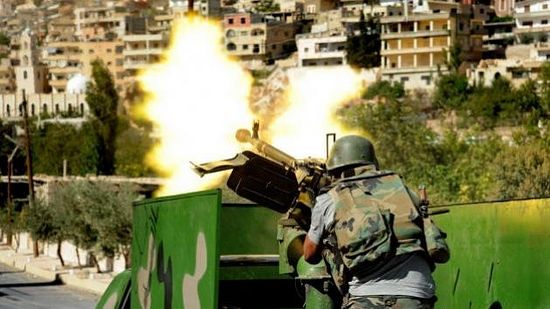
For many months now we have been following the terrible events of the Syrian war through our media. What we hardly ever hear about amid all the "expert" comment, is the fate of our Orthodox brothers and sisters. All over the Middle East, the position of Christians is becoming more tenuous but in Syria, where most are Orthodox, of the ancient Church of Antioch, it is catastrophic. Churches have been desecrated and destroyed, communities uprooted, bishops kidnapped and tens of thousands of people driven from their own country. It is not political to say so, but simply a statement of fact, that only the Russian Federation, through its government and Church leaders, seems at all concerned with this tragedy of Orthodox Syria.
Meanwhile, our newspapers and Television channels criticise and attack Russia and its foreign policy ceaselessly. Countries with appalling human rights records and brutal leaders are treated much more gently than Russia is. All Russians are aware of this; but why is it so?
The reasons go back many centuries and are too complex to discuss in this single column – perhaps they need several weeks to unravel. What is immediately clear, however, is that is is not possible to separate (except during the relatively brief years of the Soviet period) western negativity towards Russia from anti-Orthodox prejudice as a whole.
There are a number of books available which collect together accounts of the country by western visitors to Russia over the last four or five hundred years. Some learnt the language and became familiar with the culture, others did not. By no means all were negative in their assessments, especially those who lived in Russia for long periods. Let us look, first of all, at the observers who write about the Orthodox Church.
In 1763, John Glen King became Anglican chaplain to the English residents in St Petersburg. He held the post for eleven years and in that time acquired a good knowledge of Russian and Church Slavonic. In fact he wrote a lengthy description of the "Rites and Ceremonies of the Greek [i.e. Orthodox] Church in Russia" which included some good translations of our services. He was a warm admirer of Catherine II, whom he hoped would speed up Russia's westernisation and "form the taste of her subjects."
He writes, however, as a strict protestant and entirely rejects Orthodox tradition and practice – especially of course, the veneration of icons – which he regards as superstitious (a word he is very fond of) and absurd. One phrase of King's book will give a flavour of his approach – here he is, speaking of Russian monasteries: "The notion of making the height of virtue, and the perfection of human nature to consist in solitude and contemplation, is the most extravagant of all the unreasonable doctrines fanaticism and ignorance have ever conceived."
He clearly believes that Russia will not progress in civilization until all such "doctrines" are abandoned, that is, until it ceases to be Orthodox. It is its religion which is the country's problem, "for the natives are no means wanting in quickness of parts."
King was very proud of his book and was anxious to gain the Empress's official approval of it. Fortunately, Catherine, though not usually noted for her devoutness, could see the absurdity of this and sent him word that "the Greek Church needed not the apology of a stranger."
Next week we will look at another western writer who visited Russia, this time in the nineteenth century, the celebrated French aristocrat, the Marquis de Custine. He was to carry King's speculations to their logical conclusion.
Orthodox Thoughts for the Week – 16 September 2013
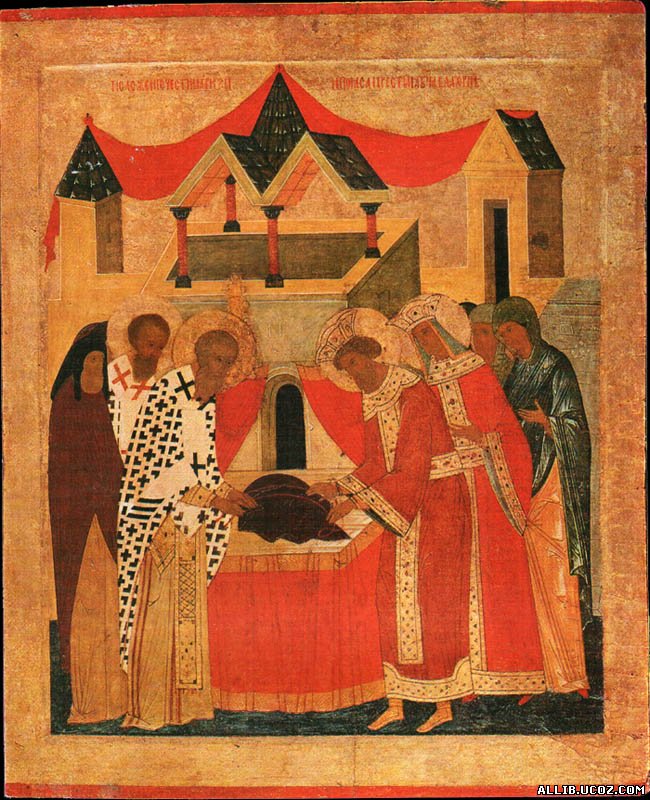
An Unsolved Mystery
A few days ago our Church calendar showed the rather obscure feast of The Placing of the Sash of the Mother of God. This feast has an interesting connection with the history of Orthodoxy in these Islands but one that is now quite forgotten. When this day was first kept as a commemoration, the precious relic of the Virgin's Sash (sometimes translated as Cincture or girdle) was kept in one of Constantinople's great churches. The major part of it was lost during the Latin capture and desecration of the city in 1204 - probably it was taken to the west - but a small portion found its way to the monastery of Vatopedi on the Holy Mountain of Athos, where it is still venerated and regarded as one of the most precious treasures of that place.
Until the 1970s, the London cathedral of the Russian Church Abroad (ROCOR) possessed an icon of the Dormition of the Theotokos which oral tradition stated was painted by one of the priests attached to the old Russian Embassy chapel in the 18th century. As well as being a precious link with those early days it was also the main icon of the church, which had been dedicated to the Dormition from it's founding in the time of Emperor Peter I. In the lower right hand corner of the icon was a small plain silver door behind which had been enshrined, probably soon after the icon was painted, a single thread from the Sash relic of Vatopedi.
When a new cathedral building was acquired by the London parish in 1958, the then ruling hierarch, Saint John of Shanghai and San Francisco, ordered that the treasured image should always be kept on an analogion in the middle of the church.
Tragically, in the 1970s, the cathedral was broken into and robbed. Among the sacred objects lost was the icon of the Dormition. No word has ever been heard of it since, and even the memory of its existence is now fading. No doubt it is part of someone's private collection.
It would be a wonderful blessing if the icon could be recovered, even at this late date. Is there perhaps a wealthy Russian who loves the Mother of God enough to undertake the task, which no doubt money could speed, of bringing this about?
Orthodox Thoughts for the Week – 9 September 2013
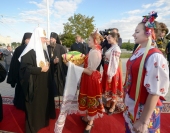
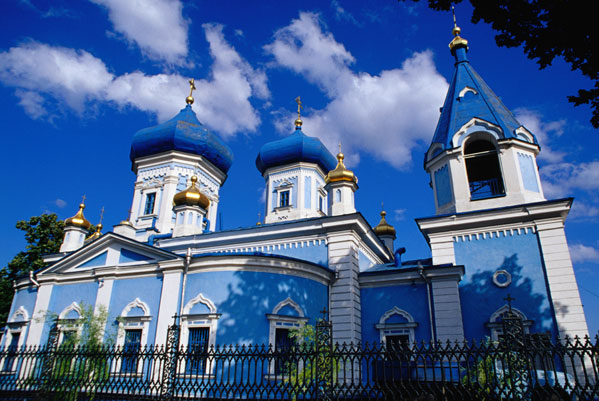
From the fourth to the ninth of September, our Holy Patriarch Kyrill, of Moscow and all Russia, visited the small country of Moldova. It is a state which most people in western Europe probably know almost nothing about, yet it is worth our while to ponder on the significance of the visit.
As so often before, our patriarch in his sermons, drew attention to the revival of the Orthodox Church in the former countries of the Soviet Union, during the last two decades. In the case of Moldova we can see this flowering of faith in a particularly dramatic way.
Moldova was once part of the great Orthodox principality of Moldavia which preserved much of the heritage of Byzantium long after the fall of Constantinople in 1453. Eventually, however, it too fell to the Ottoman Turks. With the rise of Russian power it was annexed to that Empire in 1812 after a defeat of Turkey and until 1917 was known as Bessarabia. It was added to the Soviet Union in 1945 and became independent when the USSR collapsed.
Its population is only three and a half million, and of those about three quarters are "Moldovan" - that is Romanian speakers. 94% of the inhabitants,however, are Orthodox christians. They experienced the usual suppression of religion in the Soviet period - particularly under Khrushchev, but now witness the Church's astonishing revival.
In this tiny and insignificant country there are now about 1300 Orthodox parishes, where twenty years ago there were only a few dozen; there are over forty monasteries - for ancient Moldavia was always one of the great centres of Orthodox monastic life; and there are now six dioceses with a theological academy and several seminaries.
Here then we can clearly see the fruits of the great revival of Orthodoxy in one small part of that Union which once claimed that it was soon to eradicate religion from the face of the earth.
Orthodox Thoughts for the Week – 1 September 2013
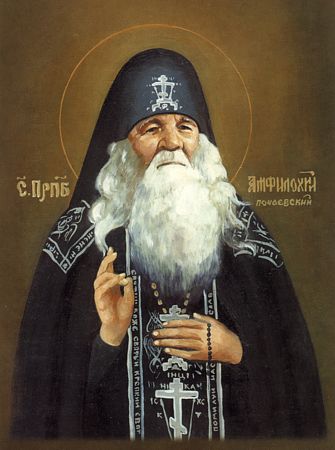

Many famous Orthodox holy places are dedicated to the Dormition of the Holy Mother of God, the Feast we kept this week. Among them is the revered pilgrimage centre and monastery of Pochaev in Ukraine.
Very recently the complete life of a twentieth century saint and wonderworker of the Pochaev Lavra, Amphilochius, was published in English for the first time, though his name has long been familiar to millions of Orthodox Russians and Ukrainians.
Full details can be read in the latest issue of The Orthodox Word (2013, nos. 288-289), the excellent journal founded by Father Seraphim Rose. What follows are just a few jottings.
Saint Amphilochius of Pochaev was born in 1894, in a very remote village in Volhynia, Russia, now in the far west of Ukraine. His parents were peasants but his father had the gift of setting broken bones and his son would accompany him on his errands of mercy. Later the boy would become well known for healings of all kinds. In 1925 he entered the Pochaev Dormition Lavra, which had found itself in newly independent Poland after the First World War, and remained a monk there for the rest of his life. He was tonsured a monk with the name Joseph in 1932 and became famous in the locality for his care of the sick and possessed. Many witnessed how the demons, who feared and hated him, would try to physically attack him through possessed persons.
After World War II, Pochaev and the surrounding region was attached to the Soviet Union, and religious persecution began there. This grew in intensity from the late 1950s, during Khruschev’s rule. Several attempts to close the monastery were made, though miraculously this was never achieved, though the number of monks was greatly reduced and pilgrimages were brutally disrupted. Father Joseph was at the centre of resistance to these attacks and on one occasion prevented the police from closing the monastery cathedral by hiding the key.
Soon after this, in 1962, he was forcibly taken away for "psychiatric treatment" and when he finally returned to the Lavra, after several years, was almost unrecognisable, his whole body swollen to a monstrous size and his skin covered in cracks, from the special "medication" he had received. He settled quietly near the monastery and in 1965 was tonsured into the great schema (habit) with the new name Amphilochius. Sick and troubled people now began to visit him from all parts of the country, so famous had his miracles become. Very many who were healed are still living and some settled in Pochaev village to be near him. He predicted the date of his death, which occurred on 1st January 1971. Despite the difficulties of the late Soviet period, large crowds came to his burial.
In 2002 Metropolitan Vladimir of Kiev and All Ukraine blessed the exhumation of the great Elder’s body - called in Orthodox terminology the "Uncovering of his Relics" and the rite of his glorification as an Orthodox Saint was celebrated on the 12th May of that year in the Dormition cathedral of Pochaev Lavra. Over 20,00 people were present.
This writer was shown a video, privately made, of the event. The scene both deeply moving and yet also frightening. Up until the Magnification, marking the actual moment of glorification, terrifying screams of the demon-possessed had constantly filled the church. It was as though evil forces were trying to prevent the Liturgy from being served at all. Even some of the bishops present looked uneasy. Then, as the Metropolitan approached the reliquary to venerate the saint for the first time, a total silence fell on the whole building which continued until the end of the Liturgy.
The relics of Saint Amphilochius now lie in the monastery cave of Saint Job of Pochaev and the two saints can be venerated together.
Orthodox Thoughts for the Week – 20 August 2013
In late July, celebrations took place in Russia, Ukraine and Belarus - the countries which once comprised ancient Rus - of great importance for Orthodox Christians. They marked the 1025 years anniversary of the "Baptism of Rus", 988 being the traditional date when the Kievan subjects of Saint Vladimir received the Orthodox Faith in the waters of the Dnieper River in Kiev.
Needless to say, these events received no mention in our European newspapers or television news bulletins. What is more disappointing is that they were also virtually ignored by Russia Today, which operates a twenty-four hour television channel in English and which is supposed to bring important Russian news to a western public. The main Ukrainian website for religious news, controlled by members of the "Ukrainian Greek Catholic Church" (sometimes called the Uniates), which normally reports church news in the minutest detail, carried no English-language mention of the celebrations at all, even though the central events occurred in the Ukrainian capital.
Saint Anthony (983-1073) of Kiev is the Father of Russian monasticism and the founder of the Kiev Caves Lavra. After the terrible slaying of the Holy Passion-Bearers Boris and Gleb, Anthony left his homeland and became a monk on the Holy Mountain Athos. Here he absorbed the wisdom of the monastic life and the love of silence. On his return to Kiev, he established a monastery overlooking the river Dnieper and lived in a cave there. When monks came to join him he appointed Saint Theodosius to be their abbot, while he lived in solitude, though remaining spiritual father of all the monks until his death. A wooden monastery which was then built, grew, over the centuries, to become the largest and most venerated in the Russian lands. Before the revolution it was by far the most visited place of pilgrimage in the Russian Empire and was the shrine of very many later "Caves" fathers. Saint Anthony himself was buried in one of the caves but his relics, in accordance with his wish, were never revealed.
The following account is a small attempt to rectify this omission.
The first public commemoration took place in Moscow. The heads of all the fifteen autocephalous Orthodox Churches had been invited to attend and nine of them did in person, whilst the remaining six sent senior bishops to represent them. On the 24th July, the feast of the Great Princess Saint Olga of Kiev, grandmother of Saint Vladimir, a solemn Liturgy was served in the huge Christ the Saviour cathedral. As the highest ranking hierarch present, Patriarch Theodoros II of Alexandria, was the main celebrant, flanked by Patriarch Theophilos of Jerusalem, Kirill of Moscow and all Rus, the Patriarchs of Georgia, Serbia and Bulgaria and the primates of the Churches of Cyprus, Poland and America. Many other bishops served with them and a very large congregation was present.
The Orthodox leaders later issued, in the name of the whole Church, an important statement concerning the plight of Christianity in many countries of the Middle East, where the very existence of the Orthodox Church is threatened, even though this is where believers where "called Christians first", as the Book of the Acts of the Apostles tells us.
On the 27th July, the patriarchs and other bishops travelled to Kiev for the main part of the celebrations. They were met by the sadly ailing but still active Metropolitan of Kiev and Ukraine, Vladimir, and a solemn thanksgiving service was held on Saint Vladimir's Hill, overlooking the Dnieper.
On the 28th, Saint Vladimir's day itself, an open-air Liturgy was held in the square in front of the Dormition Cathedral of the ancient Kiev Caves Lavra. As in Moscow, the Alexandrian Patriarch presided and all the other senior hierarchs served with him. Vast crowds surrounded the dais on which an altar had been erected, and many could be heard calling out, before the service began, "Kirill is our Patriarch!" This was no doubt meant to assure the distinguished bishops from abroad that the people were strongly supportive of the canonical Ukrainian Orthodox Church and the hierarchy headed by Metropolitan Vladimir. Also present were the presidents of Russia, Ukraine, Moldova and Serbia.
At the end of the Liturgy, at which large numbers received Holy Communion, Patriarch Theophilos III of Jerusalem preached a moving sermon in English (which was then translated into Russian) in which he expressed the hope that any future "Olgas and Vladimirs" who wished to bring their people to Orthodoxy would not be deterred or discouraged by those who already possessed the Truth. It was truly a statement of the Church's mission to the world. He gave us the dreadful warning of the Lord Himself, if we do not fulfil this mission: "Ye shut up the Kingdom of Heaven against men: for ye neither go in yourselves, neither suffer ye them that are entering to go in."
On the following day another great pan-Orthodox Liturgy was held, this time in Minsk, capital of Belarus, the third great East Slavic land. The Liturgy was served on the site of the first church built in the city, now occupied by an enormous public square.Vast crowds attended and at the conclusion of the service Patriarch Kirill preached on the important social and moral issues which confront us as Orthodox individuals and, especially, as families, in an increasingly secular world.
Thus this important anniversary, full of spiritual significance and a most moving testimony to Orthodox unity, came to an end. May it not soon be forgotten.
Orthodox Thoughts for the Week – 26 July 2013
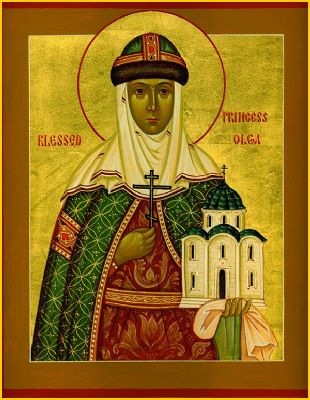
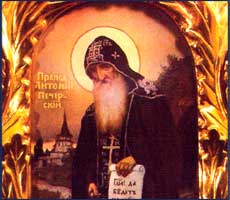
This week includes the feasts of two of the earliest and most beloved Russian saints, Our Holy Father Anthony of the Kiev Caves, on Tuesday, and the Great Princess Olga, the day after.
Saint Olga died in 969 and thus lived before the "Baptism of Kiev Rus" which took place under the Holy Great Prince Vladimir, her grandson, in 988. Her life does however, foreshadow this conversion as she was the first Christian ruler of Kiev, baptised, according to the Russian Primary Chronicle, while on a visit to Constantinople. Historians now think it more likely that she was baptised on her return home, in the church of Saint Elias, the only one existing in Kiev at that time. A beautiful little church still survives on the site, though it has been several times rebuilt. All early accounts emphasise her wisdom, beauty and goodness and although we know rather little about her later life as ruler, her memory "like the dawn that heralds the radiant day" - as the chronicles say - is still bright and and hers remains one of the most popular of Russian women's names.
Saint Anthony (983-1073) of Kiev is the Father of Russian monasticism and the founder of the Kiev Caves Lavra. After the terrible slaying of the Holy Passion-Bearers Boris and Gleb, Anthony left his homeland and became a monk on the Holy Mountain Athos. Here he absorbed the wisdom of the monastic life and the love of silence. On his return to Kiev, he established a monastery overlooking the river Dnieper and lived in a cave there. When monks came to join him he appointed Saint Theodosius to be their abbot, while he lived in solitude, though remaining spiritual father of all the monks until his death. A wooden monastery which was then built, grew, over the centuries, to become the largest and most venerated in the Russian lands. Before the revolution it was by far the most visited place of pilgrimage in the Russian Empire and was the shrine of very many later "Caves" fathers. Saint Anthony himself was buried in one of the caves but his relics, in accordance with his wish, were never revealed.
The Caves Lavra now flourishes once again and has regained nearly all its monastic buildings which were confiscated during the Soviet period.
Orthodox Thoughts for the Week – 16 July 2013
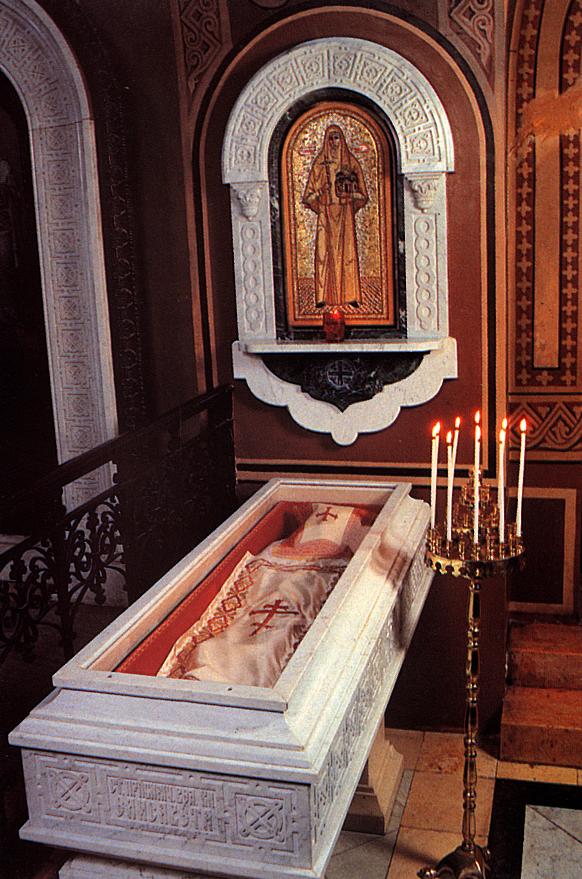
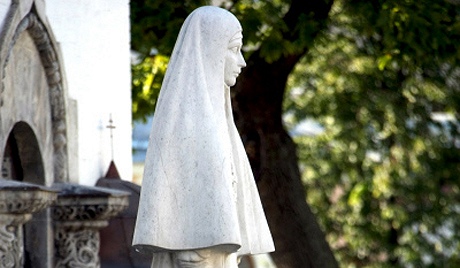
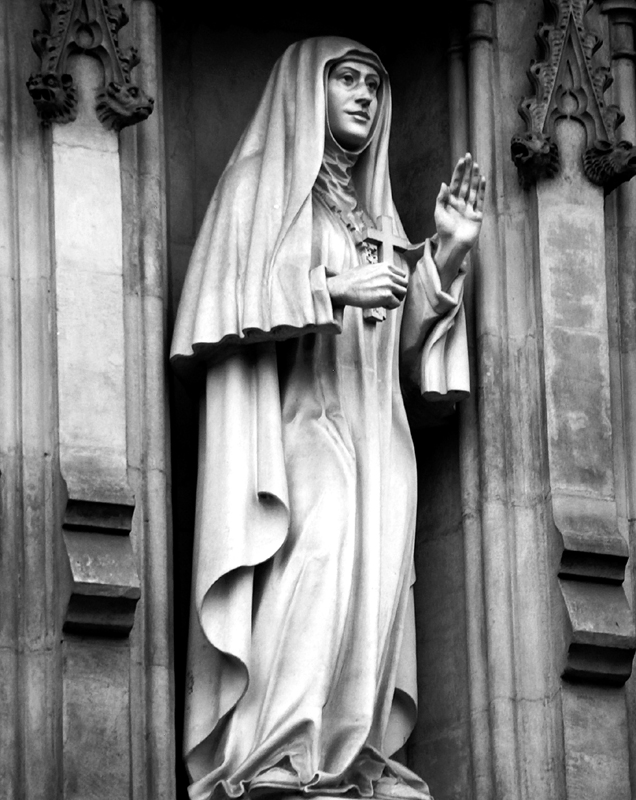
This week we celebrate our patronal feast day, that of the Holy Martyr Grand Duchess Elizabeth. What makes this year's celebration special is that for first time it will take place in the presence of the holy Relics of our dear Saint. These relics were given to us by Archbishop Mark of Berlin and Germany of the Russian Orthodox Church Abroad and solemnly brought to the Metochion by Archbishop Elisey on the 9th February 2013, when we were celebrating our other patronal feast, that of all the New Martyrs and Confessors of Russia.
This day we should remind ourselves why our Sisterhood was named in the memory of Holy New Martyr Elizabeth, and what this means for us.
First of all, the Holy Grand Duchess is a Saint of English descent. She was one of Queen Victoria's Grand-daughters, and her mother was the much-loved English Princess Alice. She died young, aged 35, and it was her wish to be buried as an Englishwoman, covered by the British Royal Standard. It was a symbolic gesture showing her deep attachment to English soil, faith and culture. She passed these feelings on to her children, which were not only demonstrated by language, but also her Christian attitude to the poor and disadvantaged, her passion for charitable works and her involvement in helping the wounded and sick during times of war. Being brought up by her Grandmother, Queen Victoria, from the age of 14 she absorbed the strict moral code and spirit of duty of the "Victorian Age". Saint Elizabeth took to Russia the best qualities of her upbringing in England and Germany and her nature came to fruition in her new Russian Orthodox environment, under influence of her devout and beloved husband the Grand Duke Sergey Aleksandrovich Romanov, brother of the emperor Alexander III. It is to be hoped that his glorification is now not too far distant.
Your can read the very first account >>> of her life written by one of her spiritual fathers bishop Anastassy, originally of Serpukhov but later head of the Russian Orthodox Church Abroad from 1936 to 1965. It was written in the year 1925, in Jerusalem, just four years after the bodies of the Grand Duchess and the Nun Barbara had been brought there from Alapaevsk by way of China.
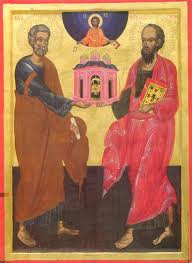
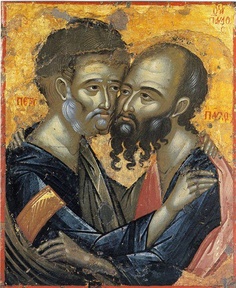
As we are coming to the end of the Apostles Fast and preparing for Friday's great feast, it is hardly possible to write on any subject other than the Pre-eminent Apostles, as our service books call Saints Peter and Paul.
It is not by accident that their names are always joined and that their feast is on the same day. 29th June (now 12th July in our calendar) is one of the earliest fixed feasts of the church year and the Apostles are remembered on this day in the East and West. By tradition, it is the day on which both Apostles were martyred, probably during Nero's persecution in the year AD64.
Saints Peter and Paul, therefore, cannot be separated; they are the Heads of the Apostles, one the Rock and the other the Vessel of Christ's teaching, as our services again emphasise.
Even the pre-eminence of the Roman Church in the first Christian millennium, was founded on the two Apostles together, as well as on the city's importance, and the ancient Roman liturgical books never mention one of their two names without adding the other.
This column is not the place for doctrinal controversy, but because some Orthodox are confused about modern Roman Catholic claims about the Pope as "Peter's successor" it is important to clearly state the Orthodox position. The Holy Fathers, both Greek and Latin, understand that when the Lord calls Peter the "Rock" He is referring less to the person than to the 'rock' of Peter's confession of faith in Christ as "Son of the Living God". This is the faith on which the Church will be built and the "keys of the Kingdom" will be given to all he local Churches, for all possess the same fulness of grace and Catholicity (Sobornost in Slavonic).
Troparion of the Feast:
O first-enthroned among the Apostles, and teachers of the whole world: Entreat the Master of all, that He grant peace to the world, and great mercy to our souls.
Exapostilarion at Matins:
Let us all hymn the foremost among the Apostles, the godly Peter and Paul, the universal luminaries, the preachers of the Faith, the divinely sounding clarions, the speakers of dogmas, the pillars of the Church and the destroyers of falsehood.
Orthodox Thoughts for the Week – 2 July 2013
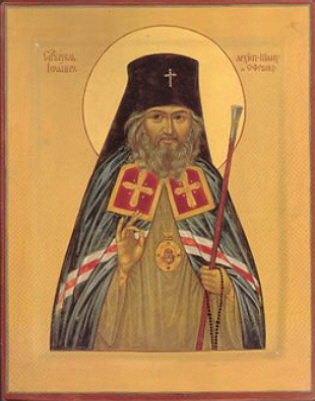
The 2nd of July was the day of the repose of a great wonder-worker of last century, Saint John (Maximovitch) of Shanghai and San Francisco (1896-1966) and it was also the day of his canonisation in 1994. His feast is usually kept on this date or on the nearest Saturday.
His life and miracles have often been published and are easily obtainable, both in Russian and in English, and need not be repeated here. What is often forgotten, however, is the period of his life, from 1950 to 1962, which he spent as bishop of Brussels and Western Europe, a Russian Church Abroad diocese which then included both France and Britain. It was during this period that the saint began to become interested in the ancient western saints and writers of the Orthodox Church. He drew up a list of fifteen of the most important saints (mostly from France) for inclusion into the church calendar and this list was approved by his fellow hierarchs of the Russian emigration. Every year he served the Divine Liturgy at Tours, where the relics of Saint Martin rested in an ancient crypt chapel, as he had a particular devotion to this man of God.
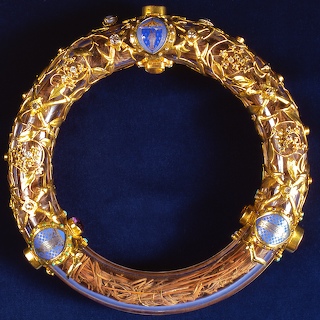
Now the seeds that Saint John planted are coming to fruition and Orthodox in many western countries visit the shrines (or sites) of their saints of the first millennium. Other even greater treasures are being discovered by the Orthodox who now live in these lands. In Paris itself there are regular pilgrimages and molebens before the relics of Saint Helena (the Empress and finder of the Holy Cross) which are in the little-known church of Saints Leu and Gilles, a short distance to the north of Notre Dame, whilst in that cathedral itself, rests the Crown of Thorns of the Lord's Passion. This very sacred thing, taken from Constantinople to Paris in the Middle Ages, can be venerated every Friday but there are also special days when Orthodox clergy can hold services in front of it.
In both these cases, the enthusiasm and devotion of Orthodox pilgrims has awaked new interest in the Roman Catholics for their almost forgotten sacred possessions, so that a deeply missionary act has been achieved.
Orthodox Thoughts for the Week – 25 June 2013
Monday of this week is called the "Day of the Holy Spirit", that is the day following Pentecost, or Trinity Sunday. The reading at the Liturgy for this day is taken from Saint Paul's Epistle to the Ephesians, and contains the following words: "Be filled with the Spirit; speaking to yourselves in psalms and hymns and spiritual songs, singing and making melody in your heart to the Lord."
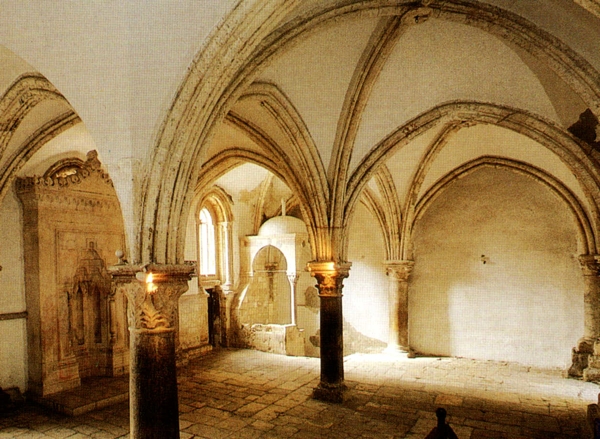
The Descent of the Holy Spirit upon the Mother of God and the Apostles took place in that same Upper Room which had seen the Lord's Mystical Supper, on the evening before His Saving Passion. The site is still well-known in Jerusalem and is visited by Orthodox pilgrims to the Holy Places.
In a previous column we saw that the site of the Lord's Ascension was no longer in Christian hands, though a Liturgy could be served on the Feast itself. In the case of the Upper Room (or Cenacle, as Roman Catholics call it) the situation is worse. Once a large Byzantine church covered the area; it was rebuilt by the Crusaders but was turned into a mosque in 1552. It is now Israeli property, being part of a complex which traditionally contains the tomb of King David. No services of any kind are allowed at all, not even public praying. Soon an agreement will be signed between the Vatican and the Israeli state, which may hand part of the building to the Roman Catholic authorities in Jerusalem, but nothing has so far been made public about this. For Orthodox, of course, this empty room with its gothic columns, is one of the holiest spots on earth, but nobody in that region much cares what we think.
On a recent Orthodox pilgrimage, during a vist to the Upper Room, a group of protestant "Pentecostals" also entered at the same time. Not able to stand the silence and the museum-like atmosphere, they broke into loud choruses of praise to the Holy Spirit, completely disregarding the local regulations. Perhaps they were right in this case, however odd their theology is. They at least understood the words of the holy Apostle quoted above.
Orthodox Thoughts for the Week – 18 June 2013
Every day our Orthodox Church calendars list the names of Saints who are remembered on that particular date, often the one on which they themselves reposed. These Saints may be the ones who have a service included in the Menaion, which is celebrated by all the Orthodox Churches, others may be feasts only for a particular Local Church , while some may be little known outside one city or diocese. Then there are "western" Saints - those who lived during the first millennium and who are only now being added to our calendars. The total number is very great and this week alone amounts to about eighty names.
Archbishop Mark of Berlin and Germany, of the Russian Orthodox Church Abroad, once recommended that Orthodox in these times should read less academic theology and much more of the lives of the Saints, who carried the true spirit of theology. Here we also find lessons for our own lives.
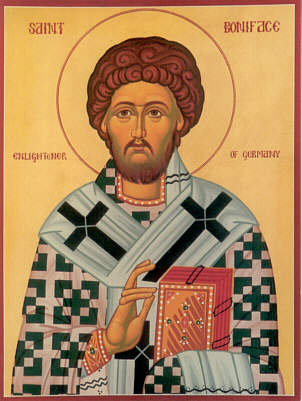
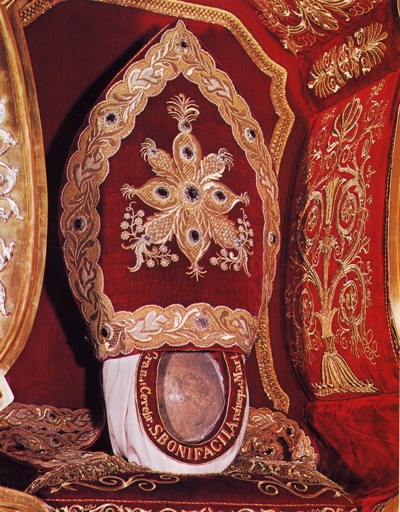
On the 5th/18th June is kept the memory of Saint Boniface, Hieromartyr and Apostle of Germany. He was Anglo-Saxon by birth, from Crediton in Devon, and preached the Gospel in many of the still pagan areas of north-western Europe - the Netherlands, Hesse, Thuringia and Bavaria, founding monasteries and new dioceses. On June 5th 754 he and fifty-two of his companions were martyred by pagan Germans by being hacked to death by swords. One stroke cut through the Gospel book the Saint Boniface was holding up before it split his skull.
He rapidly became the most important saint for the German lands and his relics were venerated at the monastery of Fulda, which he had founded. This is a beautiful baroque town, not far from Frankfurt, where modern Orthodox pilgrims can visit the saint's tomb in the cathedral and, even more movingly, see the reliquary of his skull in the cathedral treasury together with other relics of his martyrdom.
On the following day we remember one of the Desert Fathers, Bessarion (Vissarion) of Egypt. These great figures are as important for their "Sayings" as for their lives. Two will give a flavour of the Righteous Bessarion's wisdom and theology:
A brother who had sinned was turned out of the church by the priest; Abba Bessarion got up and went with him, saying, "I too am a sinner".
A brother from a large monastery said "What should I do?" The Abba replied "Keep silence and do not compare yourself with others".
Orthodox Thoughts for the Week – 11 June 2013
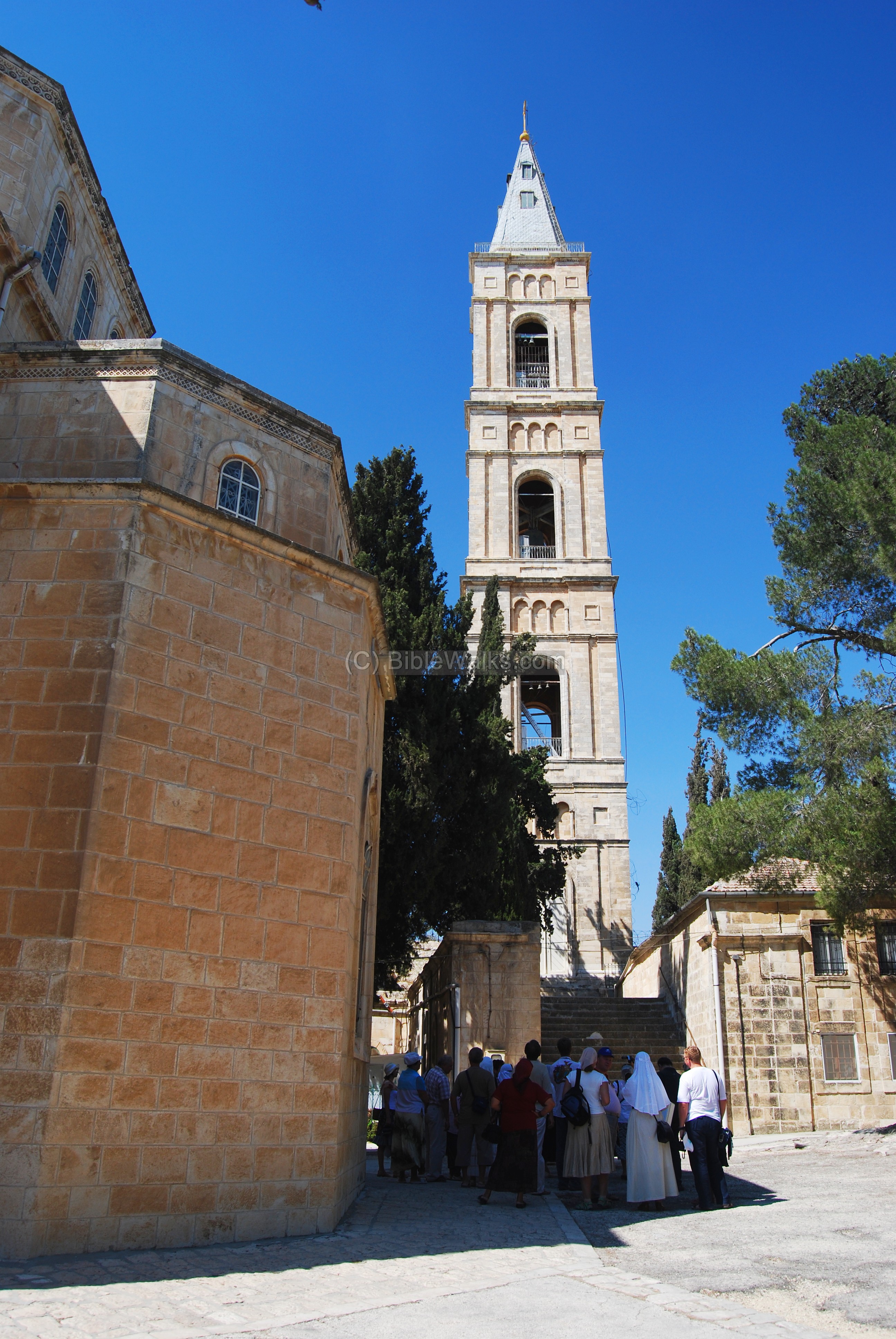
On Thursday of this week, being exactly forty days after the Sunday of Pascha, we celebrate the Ascension of Our Lord, God and Saviour Jesus Christ, when He parted from His Apostles and took His glorified Human flesh to His Father's side.
This Feast is one of the twelve great feasts of the Orthodox year and shares the characteristics of celebration with The Nativity and the Baptism of Christ and with Pentecost Sunday; for example special Antiphons are sung at the Liturgy. Yet this feast tends to be neglected in comparison with these others, partly perhaps because it always occurs on a Thursday.
This neglect, however, does not happen in Jerusalem, where all the sacred events commemorated during the weeks of the Pascha season took place.
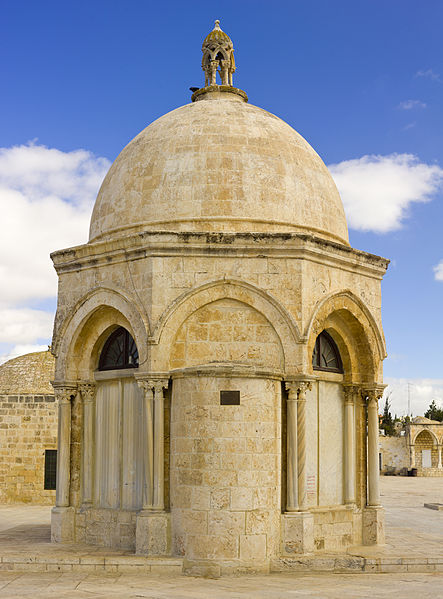
The great Saint Helena built a large church over the traditional site of the Lord's Ascension with a portion open to the sky. In the floor she found two footprints in the solid rock, said to be those of the Saviour Himself. One she took to Constantinople, whilst the other can still be seen today in its original place. Her church was later destroyed and a mosque built over the site, for strangely, Muslims believe in the Ascension of Him whom they regard as a prophet. Now a small octagonal building stands over the remaining footprint and the compound around is owned by a Muslim family. Orthodox pilgrims are always allowed inside and, once a year, on Ascension Day itself, the Patriarch of Jerusalem, or his representative, serves the Holy Liturgy there, accompanied by crowds of Orthodox people from many lands.
This place, of course, is on the Mount of Olives, so often mentioned in the Gospels, and nearby is another holy place, this time one in Orthodox hands. It is the Russian Convent of the Holy Ascension, the bell tower of which can be seen from all over Jerusalem. The convent was founded by the great archimandrite Antonin (Kapustin) in 1870. Among his other important purchases, he was able to acquire much of the summit of the Mount of Olives for the Russian Ecclesiastical Mission in Jerusalem. The convent went through very difficult times after the Russian revolution but through God's mercy it survived and is now a flourishing monastic house of nuns of many nationalities, with two beautiful churches, one of which covers the place of the First Finding of the Head of Saint John the Forerunner and Baptist. Every Ascension Thursday the services in the convent are served with great splendour by clergy of the Russian Orthodox Church Abroad (whose convent it is) and who are now happily joined by the priests of the Russian Orthodox Church of the Moscow Patriarchate.
Orthodox Thoughts for the Week – 4 June 2013
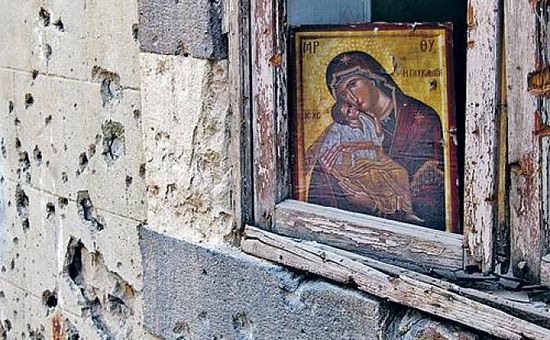
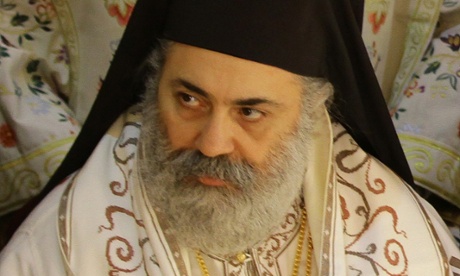
Last weekend we held a very successful Conference of the Sourozh Diocese. All the participants were united in their enthusiasm for the inspiring talks and the moving and spiritual church services. It would be easy therefore to continue the optimistic note of last week's column.
But Orthodox life in the world is not always so joyful, and suffering is never far away.
Our fellow Orthodox Christians in the Middle East suffer constant outrages, ranging from outright persecution to discrimination of every kind. This is sometimes from Islamic states such as Egypt, Iraq and Iran but it may also happen in so-called democracies like Turkey or Israel. At best this can mean that Orthodox and other Christians simply emigrate rather than stay where they are treated as second-class citizens. Every year the Christian presence in the ancient and original Patriarchates of our Church shrinks further.
On 22nd April this year the Orthodox Metropolitan of Aleppo, Paul, was kidnapped together with another bishop, and the deacon who was driving them murdered. This was done by one of the groups fighting against the Syrian government and was therefore poorly reported in our western media. In fact the BBC erroneously stated recently that the bishops had been released. In fact they are still being held – if indeed they are still alive – probably somewhere in southern Turkey. It seems to be more important, for our leaders, to protect the faction responsible for this outrage from criticism, than it is to help to secure the release of the victims.
On 13th May, another group of "opposition" fighters attacked the ancient Orthodox monastery of the Holy Prophet Elias, near the Lebanese border. The church tower was blown up and the church itself desecrated horribly. This monastery had managed to survive, until last month, for 1500 years.
Almost every week some new outrage is reported and many Orthodox have lost their lives.
One thing we can immediately start to do is to pray for our Orthodox brothers and sisters in the Holy Land and the surrounding countries, especially war-torn Syria.
At the Holy Liturgy, at the conclusion of the Great Entry, the priest serving prays for us who are present and for "all Orthodox Christians". We should all remember at that time, the Holy Patriarchate of Antioch, always so close to the Russian Orthodox Church, which now is experiencing real persecution.
Orthodox Thoughts for the Week – 29 May 2013
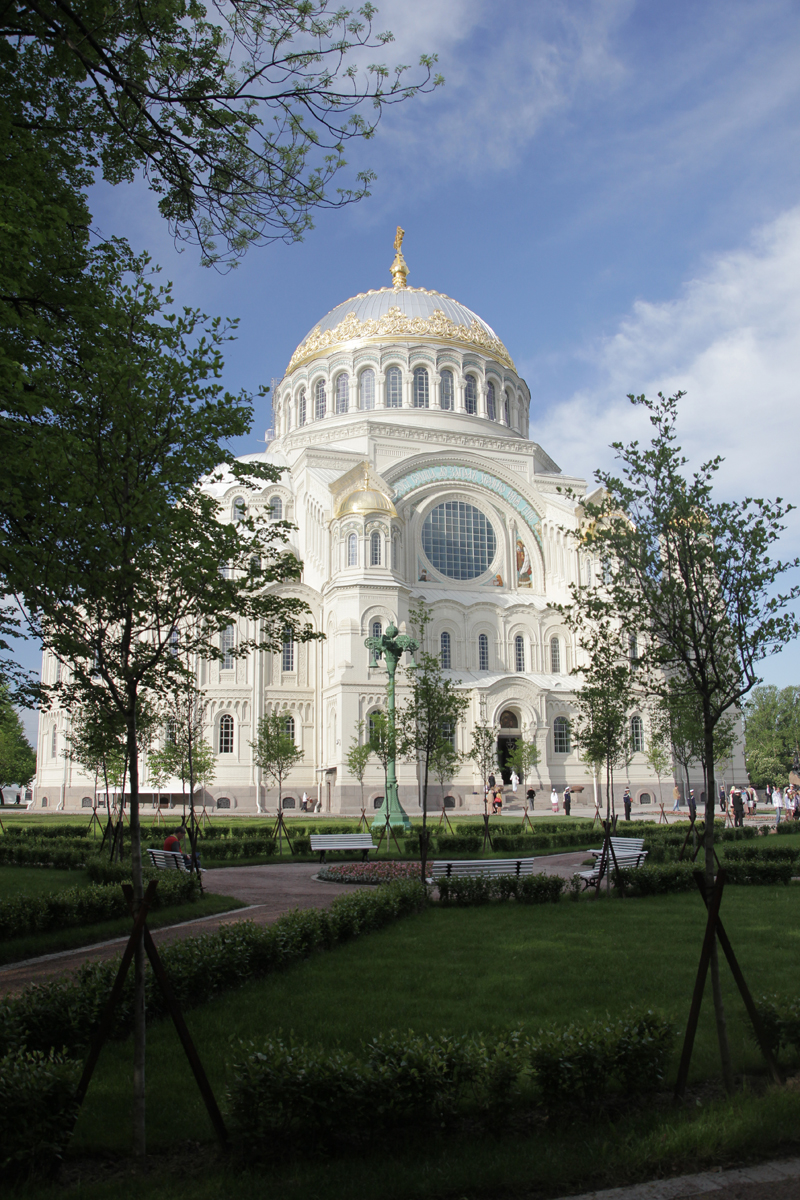
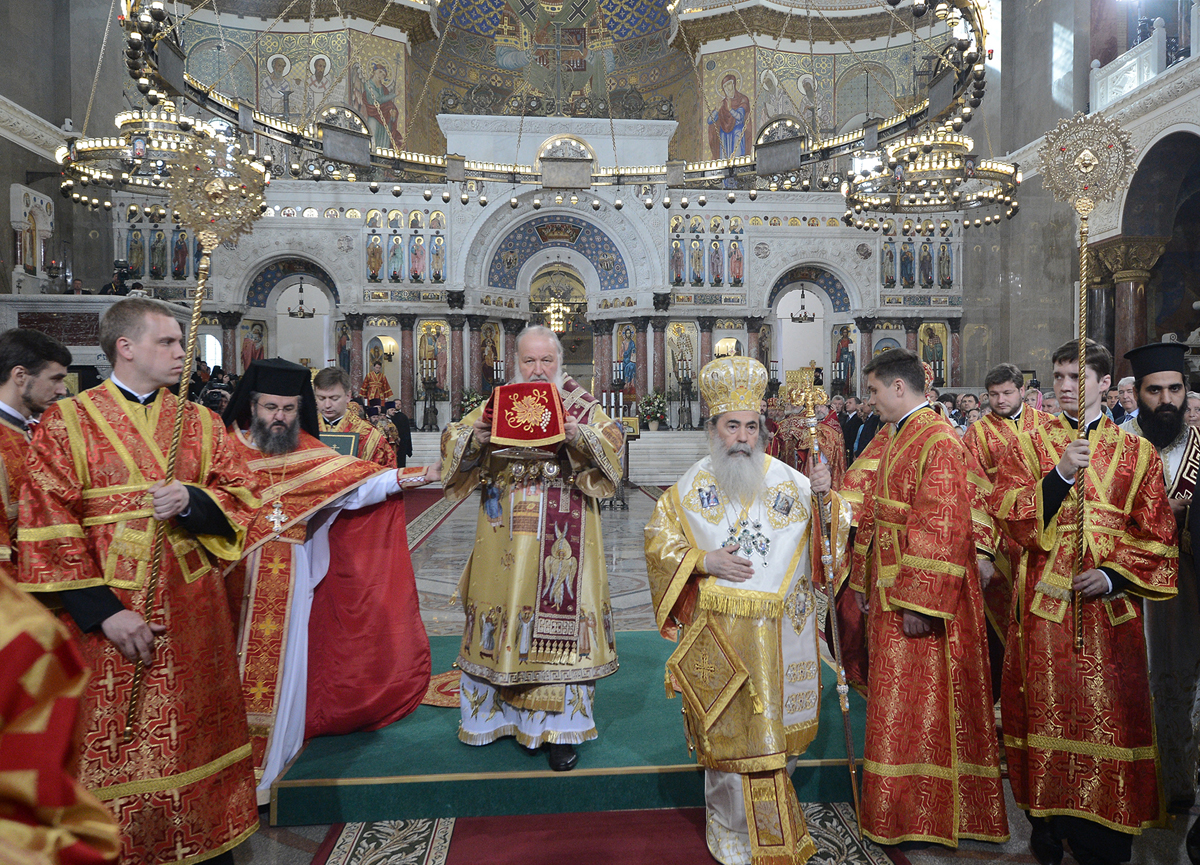

This week we celebrate the feast of Mid-Pentecost,on the Wednesday which is exactly half way between Holy Pascha and the Sunday of the Holy Trinity, fifty days later. This fifty day period is really one long feast of rejoicing as we recall Christ's Resurrection whilst looking forward to the Day of the Descent of the Holy Spirit.
On Mid-Pentecost the words of the service emphasise the Saviour's role as "Wisdom, Word and Power of God" and because of this it was the day on which the Great Church of the Holy Wisdom (Agia Sophia) in Constantinople and other churches of the same dedication kept their feast day.
Outside St Petersburg in the town of Kronstadt, on Kotlin Island, stands a huge church which was modelled on Agia Sophia and which guide books often wrongly call "Saint Sophia". Its foundation stone was laid by the great Saint John of Kronstadt in 1902, in the presence of the Tsar-Martyr Nicholas, and the building was completed in 1913.
After being put to various profane uses during the communist period, the cathedral was returned to the Church in 2005 under its original and proper name - "The Baltic Fleet Naval Cathedral of Saint Nicholas".
Now all the work of restoration of the building, with its exquisite internal decoration, has been finished and on Tuesday, that is the day before Mid-Pentecost, the Rite of solemn Consecration was performed by Their Holinesses the Patriarchs Kirill of Moscow and All Russia and Theophilos III of Jerusalem, who is currently visiting Russia. The Patriarch of Jerusalem expressed amazement at the spiritual splendour of the scene both inside and outside the church. The entire square in front of the cathedral was filled with naval particpants.
This was a joyful and major sign of the revival of church life in Russia's second capital. When this writer visited Kronstadt in the late 1990s, there was only one tiny church and a statue of Lenin still stood on the site of the altar where Saint John of Kronstadt served. The Naval cathedral was still a concert hall and no-one dreamt it would ever be used for worship again.
All has now changed and on Tuesday, in the presence of the Prime Minister's wife, Mrs Svetlana Medvedeva, and the Commanders of the Baltic, Pacific, Black Sea and Caspian fleets and innumerable Marine cadets of the four fleets, the final consecration took place. The cathedral will be a memorial to all Fallen Russian sailors.
Events like this are never reported on our television channels, any more than any mention is made of the our feast days, yet such "hidden" news items are often the ones which should bring joy and hope to the hearts of Orthodox Christians.
18 March
The Third Sunday of the Great Fast is called the Adoration of the Precious and Life-Giving Cross of the Lord.
"The ceremonies are closely parallel to those at the feasts of the Exaltation of the Cross (14/27 September) and the Procession of the Cross (1/14 August). The solemn veneration of the Cross on this third Sunday in Lent prepares us for the commemoration of the Crucifixion which is soon to follow on Great Friday, and at the same time it reminds us that the whole of Lent is a period when we are crucified with Christ: as the Synaxarion says, 'Through the forty-day fast, we too are in a way crucified, dying to the passions'."
[Metropolitan Kallistos]
During the veneration of the Cross and at other times during the services on this day we sing, slowly and solemnly the following verse:
We venerate Thy Cross, O Master, and Thy holy Resurrection we glorify.
4 March - The Sunday of Orthodoxy
THE FIRST SUNDAY OF THE GREAT FAST is called the Sunday of Orthodoxy. This is because it celebrates the second and final restoration of Icons to our churches in the year 843, after the defeat of the Iconoclasts who had banned their veneration for many years. A great procession was held on this Sunday, led by the Emperor and his mother Saint Theodora, carrying Icons through Constantinople. Before this event, the Sunday had been dedicated to Moses and the Prophets, who are still remembered in some of the sticheras of the day. In many large churches, the "Rite of Orthodoxy" is served after the Liturgy in which not only are those who suffered for the sake of the Holy Icons honoured by name but also all who defended the truth at the First Seven Councils and throughout the history of the Church. In addition, sixty anathemas are pronounced against prominant heretics of past ages.
4 February - THE HOLY NEW MARTYRS AND CONFESSORS OF RUSSIA
On Saturday 4th February we shall be celebrating our second Patronal Feast, which is always kept on the weekend closest to the day of the Martyrdom of Saint Vladimir, Metropolitan of Kiev (25th January/7th February 1918), the first of the New Martyrs of Russia.
On this website you can find the wonderful collection of full lives of many of the better-known New Martyrs (from St Nicholas Russian Orthodox Church near Dallas, Texas) but each year more and more names of Martyrs are added to our Russian Church Calendar as research yields fresh details of the period of persecution. Nor are the names confined to those shot in the 1930s. One inspiring figure, Bishop Afanasy of Kovrov, died at liberty in 1962. A little before this, he noted in his diary the following stark and terrifying figures:
"June 27, 1954,was the 33rd anniversary of my Episcopal consecration. During that time I spent 33 months in my diocese; 32 months enjoying freedom but unable to exercise my duties; 76 months in exile; 254 months in prison or in hard labour."
In these few lines are summed up the reasons why we must gather and celebrate the memory of our Orthodox Martyrs and must implore their prayers for us in all our weaknesses and necessities.
31 July
On Sunday 31st July we remember a number of great monastic saints, including Our Holy Father Pambo, the Hermit of the Egyptian desert in the fourth century. No unnecessay word ever passed his lips and he never answered a request for spiritual advice without prior prayer and pondering in his heart. Once the Patriarch of Alexandria, Theophilus, was visiting the monks nearby and Pambo was begged by them to give "a word" to the great hierarch. He replied, "If my silence is of no help to him, neither will my words be."
7 August
On this day we keep the feast of the Dormition of the Righteous Anna, Mother of the Theotokos (Mother of God). So important was she regarded in Byzantine times that it was established that she and her husband St Joachim should always be named at the end of any prayer or blessing mentioning the saints, as the "ancestors of God." On this day also, in 1918, were slain the Grand-Duke Michael Alexandrovich, brother of the Tsar-Martyr and briefly his successor, together with his secretary Nicholas Johnson. As can be guessed from the name the latter was of English descent and an icon was recently painted of him in this country. They died at Perm, not far from Alapaevsk, where Saint Elizabeth was martyred.
31 July
On Sunday 31st July we remember a number of great monastic saints, including Our Holy Father Pambo, the Hermit of the Egyptian desert in the fourth century. No unnecessay word ever passed his lips and he never answered a request for spiritual advice without prior prayer and pondering in his heart. Once the Patriarch of Alexandria, Theophilus, was visiting the monks nearby and Pambo was begged by them to give "a word" to the great hierarch. He replied, "If my silence is of no help to him, neither will my words be."
24 July
Among many other saints, including the famous Olga, Princess of Kiev and earliest of all the saints of Kievan Russia, we should mention the Serbian Hieromartyrs who suffered during the War period 1941-1945. Many Serbian Orthodox were martyred in the most atrocious ways during this time at the hands of the Croatian Fascist Ustashi, who were also fanatical Roman Catholics. Five bishops were slaughtered and many helpless peasants. Today we remember specifically a group of twenty-eight parish priests by name.
18 July
This year we shall keep the memory of the Royal Martyrs of Russia: the God-crowned Tsar-Martyr Nicholas Alexandrovich, the Tsaritsa Alexandra Feodorovna and their children, the Tsarevich Alexis and the Grand Duchesses Olga, Tatiana, Maria and Anastasia. They were brutally slain in the cellar of the Ipatiev House in Ekaterinburg after midnight on 4th/17th July 1918. Their servants were also shot, either with them or soon afterwards, ten persons in all, including a humble cook and the sailor, Clement Nagorny, who had cared for the sick Tsarevich since early childhood. On the same night, Blessed Maria Ivanovna, the fool-for-Christ of Diveyevo, began to shout and scream: "They are killing the princesses with bayonets!"
17 July
Sunday the 17th July is actually the day of the martyrdom of the Imperial Family (in 1918): the Tsar-Martyr Nicholas Alexandrovich, his wife and children. Our own Saint, Grand Duchess Elizabeth and those with her, were slain on the following day (18th). Because this is our main Feast, we are reversing the order and will remember Saint Elizabeth on Sunday and the Royal Martyrs on Monday. It is important to remember that theRoyal Martyrs were not killed accidentally ("by local Bolsheviks") but as part of a terrible, and nearly succesful, attempt to extirminate the entire House of Romanov. In the same period the Tsar's brother, Grand Duke Michael, was also slain at Perm.
12 July
The Feast of the Holy Apostles Peter and Paul occupies a position in the Church's year only just below that of the Twelve Great Feasts. It is preceded by fast which varies in length but which this year lasts for three weeks. The feast originated in Rome, where the Apostles were both martyred and where two huge basilicas were erected in the time of Saint Constantine the Great. On 29th June (now 12th July in the modern calendar) the Liturgy was celebrated at St Peter's and the next day at St Paul's "Outside the Walls." The two saints are always mentioned and celebrated together in our Orthodox services.
3 July
On Sunday 3rd of July we follow the Russian Saints by remembering All the Saints of the British Isles (or as some now prefer, "the Isles").This includes all the early Celtic saints of Britain and Ireland as well as the Anglo-Saxon saints who shone forth after the mission of Saints Gregory and Augustine. Many of them, of course, have their own separate feast days during the year.
26 June
On Sunday 26th June we remember All the Saints of the Russian Land. This feast was instituted by the Local Council of the Russian Orthodox Church in 1918 (which re-established the Patriarchate) to follow the Sunday of All Saints. The Canon at Matins is very beautiful and is a spiritual journey through Russian history, mentioning many of the saints by name.
19 June
The Feast of All the Saints of every age and land is always kept on the Sunday after Pentecost-Trinity Sunday - this year the 19th June. It is a great celebration and marks the end of the use of the special services of the Pentecostarion. It is also the second feast of our cathedral in London, as this was originally the Anglican parish church of All Saints Ennismore Gardens. When it became Orthodox the principal dedication of the Dormition of the Mother of God was added, as this had been the title of the Russian Embassy chapel from the time of the Emperor Peter I.
Ascension
The Great Feast of the ASCENSION of Our Lord and Saviour is always celebrated on a Thursday, that is exactly forty days after the Sunday of the Resurrection, as the Gospels clearly state. These days it is widely neglected by Orthodox christians although, of the feasts occuring on weekdays, it is only exceeded in impotance by Christmas and the Baptism of the Lord and ought to be always remembered. It is essentially a joyful feast, for as the Kondak of the day says, Christ has not really departed but remains "inseparable from us." Moreover he has united "things on earth with the heavens" - that is, he has elevated our human nature to a place at the right hand of the Father. Finally, He has told us that unless He ascends to the Father, the Holy Spirit will not be sent to us on the Day of Pentecost.
As happens so often, the Troparion of the day sums up beautifully the deepest meaning of the feast:
THOU hast Ascended in glory, O Christ our God, having gladdened Thy disciples with the promise of the Holy Spirit; and they were assured by the blessing that Thou art the Son of God, the Redeemer of the world.
Holy Week
This year, all the services for Holy and Great Thursday, Friday and Saturday, as well as the night of PASCHA, will be served at the chapel of the Sisterhood.
Unfortunately, many Orthodox these days are unfamiliar with these beautiful and spiritually uplifting services and sometimes even content themselves with only attending the Matins of PASCHA at midnight on Saturday. All Orthodox should at least try to come to the Matins of Holy Friday (ie the service on Thursday evening) with its twelve Gospel readings relating the Lord's Passion, and to the Vespers on Friday afternoon when the Burial Shroud (or Winding Sheet - the Plashchenitsa) is brought to the middle of the church.
All these services are contained in THE LENTEN TRIODION (in the translation of Metropolitan Kallistos) with a lot of wonderful explanatory material. Those unable to attend the services should at least try to read them at home using this book.
Another neglected day is the morning of Great Saturday, when in the early Church the catechumens were baptised. It is a truly wonderful and joyful Liturgy, commencing with many readings from the Old Testament. It is especially suited to those whose family commitments make it difficult to attend the PASCHA night services.
For those who have no books to consult, the following websites can be recommended:
http://www.monachos.net/content/lent has a great deal of useful material explaining the spiritual significance of the last week of the Triodion;
http://www.anastasis.org.uk/triodion.htm is one of the only sites to have all the actual texts of the services online.
The 1st week of the Great Lent
The services during the first week of Lent are beautiful, spiritual and long. Each day from Monday to Thursday a section of the Great Canon of St Andrew of Crete is chanted at Great Compline. On Wednesday and Friday the solemn and moving Liturgy of the Presanctified Gifts is served in the morning. On Saturday the miracle of the Great Martyr Theodore is commemorated (the early martyrs are constantly remembered during the Fast).
It would be impossible to describe all these services here. All that can be said is that Orthodox Christians should familiarise themselves with the beautiful words of the LENTEN TRIODION which contains the special services of the Great Fast. There is a very good English translation of this by Metropolitan Kallistos (Ware) which also contains his explanatory introduction and one of the best accounts of the true meaning of Christian fasting available in any language.
The Kontakion of the Great Canon:
My soul, O my soul, rise up! Why art thou sleeping? The end draws near, and soon thou shalt be troubled. Watch, then, that Christ thy God may spare thee, for He is everywhere present and fills all things.
See link for the complete text of the Great Canon arranged for the first week of the Fast: www.monachos.net/content/patristics/patristictexts/484
Sunday 6 March: The Sunday of Forgiveness
On Sunday 6th March we will keep the last Sunday before the Great Fast begins. It is called Forgiveness Sunday not only because the Gospel at the Liturgy warns us that we must forgive each other if we expect GodÕs forgiveness but also because later in the day, at the first Vespers of the Fast itself, we bow before one other asking mutual forgiveness.
There is another theme of this Sunday which is the one most emphasised in the hymns of the Vigil Ð that of the Fall of man from the Paradise God created for him. To regain this Paradise we need to struggle spiritually in the coming Fast.
This day is also called Cheesefare Sunday because it is the last day on which dairy products should be eaten until the Day of the Resurrection.
Stichera at Vespers on Sunday evening from the Lenten Triodion:
Let us set out with joy upon the season of the Fast, and prepare ourselves for spiritual combat. Let us purify our soul and cleanse our flesh; and as we fast from food, let us abstain also from every passion. May we persevere with love and so be counted worthy to see the solemn Passion of Christ our God, and with great spiritual gladness to behold his Holy Passover.
Sunday 27th February: The Sunday of the Last Judgement
Like the other Sundays before Lent, this prepares us for one of the spiritual messages of the Great Fast Ð this time the calling to mind of the Day of the Second Coming of Christ, when each will be judged according to his or her deeds. The Gospel of this day (Matthew 25:31-46) recounts the event unforgettably in Our SaviourÕs own words.
This is also the last day on which meat should be eaten until the Sunday of Pascha but during the following week all foods except meat, including eggs, cheese and fish, are permitted, even on Wednesday and Friday.
Sedalion from the Triodion (the Service Book containing the special services of the Lenten period):
I think upon the fearful day and lament my evil acts. What answer shall I give to the immortal King? And with what boldness shall I the Prodigal gaze upon the Judge? O compassionate Father, Only-begotten Son and Holy Spirit, have mercy on me.
Site design by crewchin' studios | Copyright © 2010 Community of St. Elizabeth